

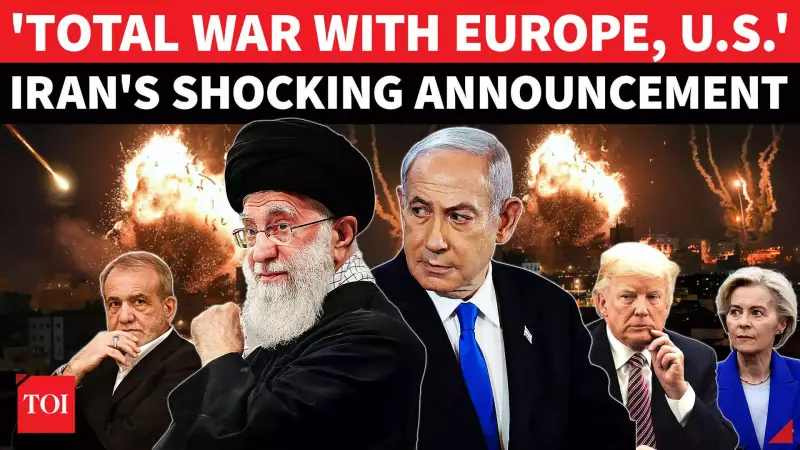
In a stark and provocative declaration, Iranian President Masoud Pezeshkian has stated that Tehran is now facing a 'total war' from a coalition of the United States, Israel, and European nations. This significant escalation in rhetoric comes just ahead of a crucial meeting between Israeli Prime Minister Benjamin Netanyahu and former US President Donald Trump.
Pezeshkian's Stark Warning on 'Complex' Pressure Campaign
President Masoud Pezeshkian, addressing the nation, framed the ongoing geopolitical pressure as a full-scale conflict. He asserted that the current campaign against Iran is more complex and damaging than the direct military confrontations seen in the past Iran-US-Israel war. His remarks, made on December 28, 2025, signal a hardening of Iran's official stance as regional tensions remain dangerously high.
The Iranian leader did not mince words, directly linking the heightened state of alert to the impending diplomatic engagement between Netanyahu and Trump. This meeting is being closely watched globally for its potential to reshape alliances and strategies in the volatile Middle East.

Iran's Military Posture and Readiness to Respond
Amidst the warnings of an all-out war, President Pezeshkian delivered a clear message of defiance. He claimed that Iran is militarily stronger now than in previous years and is fully prepared to deliver a decisive response to any aggression. This statement appears designed to project strength and deterrence to its adversaries.
The backdrop to this fiery speech includes a series of destabilising events that have kept the region on a knife's edge:
- Recent military strikes and counter-strikes across the Middle East.
- A relentless campaign of international sanctions targeting Iran's economy and its key sectors.
- Stalled negotiations concerning Iran's nuclear programme, leaving a major source of conflict unresolved.
Broader Regional Implications and Global Concerns
The declaration of a 'total war' by a state actor like Iran has immediate and grave implications for global security. It raises the risk of miscalculation and opens the door for a broader regional conflagration. The timing, just before the Trump-Netanyahu summit, suggests Iran is positioning itself for a potential shift in US-Israel policy, especially with the possibility of Donald Trump returning to power.
For India, a nation with significant strategic interests and energy needs tied to the stability of the Middle East, this escalation presents serious diplomatic and economic challenges. New Delhi has traditionally maintained careful relations with both the Gulf nations and Iran, and a spiralling conflict could jeopardise key partnerships and energy supplies.
The international community now faces a critical test in de-escalating the situation. The path forward is fraught, with nuclear talks in disarray and trust between the involved parties at a historic low. The outcome of the Netanyahu-Trump meeting may well determine whether this war of words moves closer to becoming a reality.






