

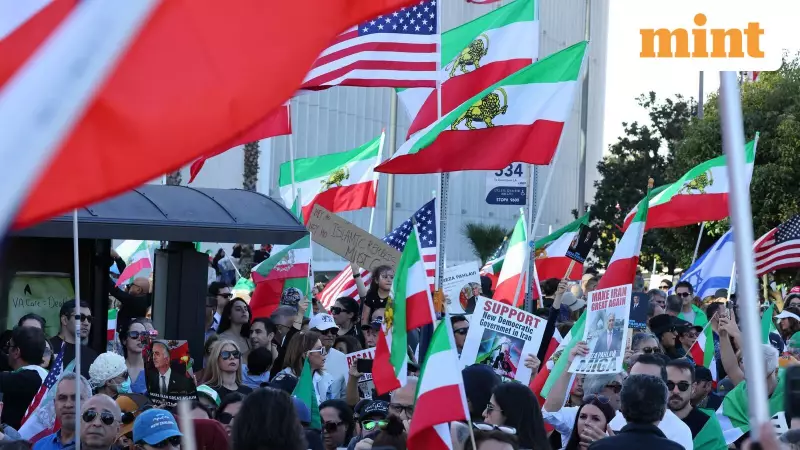
Iran's ruling establishment is confronting what analysts describe as its most severe test in decades, following a devastating short war and a resulting wave of domestic unrest that has left at least 500 people dead. The regime, historically resilient, now operates from a position of significant weakness, with its foundational promise of security for its citizens in tatters.
The Broken Social Contract: From Invincibility to Humiliation
The 12-day war with Israel and the United States in June 2025 proved to be a pivotal moment, shattering the Islamic Republic's carefully cultivated image of strength and invincibility. For years, the regime's unwritten pact with the Iranian people was based on enduring economic hardship and political restrictions in exchange for a powerful state that shielded the nation from foreign threats.
This assumption collapsed when Israeli airstrikes hit the heart of Tehran, decimating much of Iran's military leadership. A subsequent U.S. bombing campaign delivered a heavy blow to the country's nuclear program. "This was the last straw," said Ali Vaez, Iran project director at the International Crisis Group. He noted that the regime's final claim to legitimacy—providing safety—was demolished, leaving people feeling they have nothing left to lose.

A Regime Isolated and Under Fire
The immediate spark for the latest protests, which have persisted for over two weeks despite a severe crackdown, was a series of currency devaluations. These are a symptom of a deeper economic crisis fueled by declining oil prices and stringent Western sanctions. However, experts argue this economic pain is inextricably linked to Iran's foreign policy failures and global isolation.
Supreme Leader Ali Khamenei, 86, has resisted calls for a strategic shift since the war. The regime has not sought a nuclear deal with the U.S. to lift sanctions, nor has it implemented meaningful domestic reforms. "The surprise was that once you are blown up, you still want to go back to the same policies," said Alex Vatanka of the Middle East Institute, highlighting a growing sense of hopelessness among Iranians.
International Reactions and Regional Fears
The international landscape has shifted significantly compared to previous protest cycles like the 2009 Green Revolution. Former U.S. President Donald Trump has openly encouraged the protesters, threatening action if the regime continues its violent crackdown. On social media, Trump posted, "Iran is looking at FREEDOM, perhaps like never before. The U.S.A. stands ready to help!!!"
However, Iran's regional neighbors, including Saudi Arabia, hold mixed feelings. While they desire a weakened Iran, many fear the collapse of the state could plunge the country of over 90 million into a Syria-like civil war, with unrest among Kurdish and Baluchi minorities spilling across borders. "They prefer to deal with an Iran that they know, rather than something new or a zone of instability," said Qatar University's Nikolay Kozhanov.
Historical Parallels and a Possible Off-Ramp
History shows that military humiliation can be the catalyst for the fall of authoritarian regimes, from Serbia's Slobodan Milošević to Argentina's junta after the Falklands War. Some analysts see a potential path for the regime to survive through a dramatic internal change. Ellie Geranmayeh of the European Council on Foreign Relations suggested that if the U.S. were to remove Khamenei, it could allow a more pragmatic faction within the regime to take over, potentially offering economic relief through a new deal.
This scenario, reminiscent of the recent change in Venezuela, might appeal to Trump and Gulf states. Yet, for the pro-democracy protesters on Iran's streets, such an outcome would be a bitter betrayal. "It would mean that everyone who lost their lives so far... would have done it in vain," said think tank CEO Esfandyar Batmanghelidj.
As footage of continued protests and brutal crackdowns seeps out of the country, the fundamental question remains: Can a regime built on revolutionary ideology and external defiance survive when its core promises have been broken, and its people have declared, "Enough is enough"?






