Iran's Islamic Revolutionary Guard Corps (IRGC) has issued a stark warning that any new military action against the country will result in the conflict spreading beyond the Middle East. The statement, released on Tuesday, comes amid heightened tensions in the region following recent escalations involving Iran and its allies.
IRGC's Warning
The IRGC's top commander, Major General Hossein Salami, stated that any aggression against Iran would not be limited to the region. "If the enemy takes new military action, the war will be extended outside the Middle East," Salami said, according to the official IRGC news agency. He emphasized that Iran's response would be swift and decisive, targeting the interests of any nation that participates in or supports such actions.
Regional Context
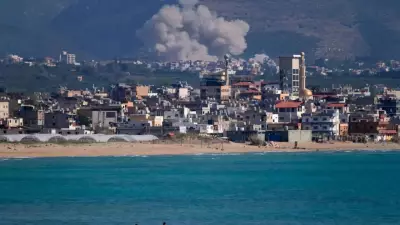
The warning comes as the Middle East faces multiple flashpoints, including the ongoing conflict between Israel and Hamas in Gaza, as well as tensions with Hezbollah in Lebanon. Iran has been a key supporter of both groups, and recent Israeli airstrikes on Iranian targets in Syria have raised the risk of a broader confrontation. The IRGC's statement is seen as a direct response to threats from the United States and Israel, which have vowed to prevent Iran from acquiring nuclear weapons and to counter its regional influence.

International Reaction
The international community has expressed concern over the escalating rhetoric. The United Nations called for restraint, urging all parties to avoid actions that could lead to a wider war. Meanwhile, analysts warn that a direct conflict between Iran and its adversaries could have catastrophic consequences, potentially drawing in global powers and disrupting oil supplies from the region.
Iran's Military Capabilities
Iran has invested heavily in its missile program and drone technology, which it claims can reach targets across the Middle East and beyond. The IRGC also controls a network of proxy forces in Iraq, Syria, Yemen, and Lebanon, which could be activated in the event of a conflict. Salami's warning underscores Iran's strategy of deterrence, signaling that any attack will be met with a disproportionate response.
Conclusion
The IRGC's latest statement highlights the fragile state of security in the Middle East. As diplomatic efforts continue to de-escalate tensions, the possibility of a wider war remains a serious concern. The region watches closely as Iran and its adversaries prepare for potential confrontation, with the entire world aware of the stakes involved.