

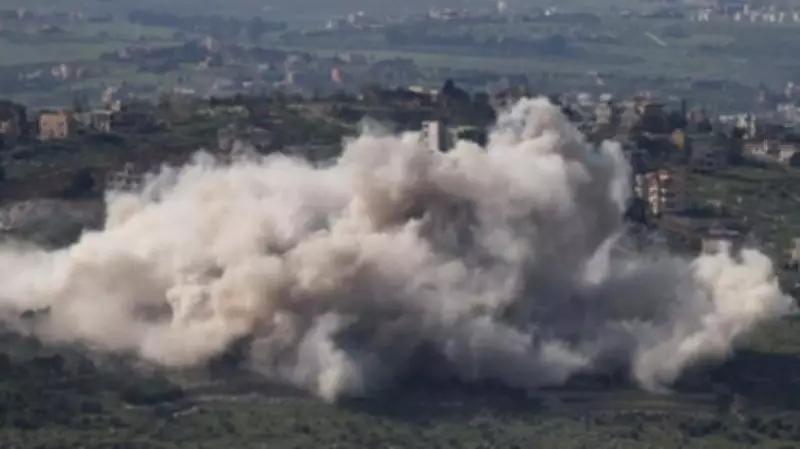
Israeli airstrikes struck eastern Lebanon on Thursday, expanding the scope of military operations despite a fragile ceasefire agreement. The strikes targeted areas near the city of Baalbek, a Hezbollah stronghold, marking the first such attacks in the region since the ceasefire took effect. The escalation raises concerns about a broader regional conflict.
Details of the Strikes
According to Lebanese security sources, Israeli warplanes carried out at least three airstrikes on positions east of Baalbek. The targets included a weapons depot and a training camp belonging to Hezbollah. The strikes caused significant damage but no immediate casualties were reported. The Israeli military confirmed the attacks, stating they were in response to a rocket launch from Lebanese territory that landed in northern Israel earlier in the day.
Ceasefire Violations
The airstrikes violate the terms of the US-brokered ceasefire that ended the 34-day war between Israel and Hezbollah in 2006. Under the agreement, both sides are prohibited from conducting military operations across the border. However, sporadic violations have occurred over the years, with Israel accusing Hezbollah of rearming and Hezbollah accusing Israel of encroaching on Lebanese sovereignty.

The United Nations Interim Force in Lebanon (UNIFIL) expressed deep concern over the escalation, urging both parties to exercise restraint. A UNIFIL spokesperson said, "These violations undermine the stability of the region and the safety of civilians."
Regional Implications
The strikes come amid heightened tensions across the Middle East. Israel has been engaged in a parallel conflict with Hamas in Gaza, and the expansion of operations into Lebanon risks opening a second front. Hezbollah has warned that any attack on Lebanon would be met with a strong response. Analysts fear that miscalculations could lead to a wider war involving Iran and other regional actors.
The Lebanese government condemned the strikes, calling them a "blatant violation of international law." Prime Minister Najib Mikati urged the international community to intervene to prevent further escalation. Meanwhile, Hezbollah did not immediately claim responsibility for the rocket launch that preceded the strikes, but the group has historically retaliated against Israeli attacks.
International Reactions
The United States called for de-escalation, with State Department spokesman Matthew Miller saying, "We urge all parties to respect the ceasefire and avoid actions that could lead to a wider conflict." France, which has historical ties to Lebanon, also condemned the strikes and called for an emergency meeting of the UN Security Council.
Russia and China expressed concern, with Beijing warning against any actions that could destabilize the region further. The Arab League denounced the Israeli strikes as "aggression" and called for an immediate cessation of hostilities.
Humanitarian Impact
The strikes have heightened fears among civilians in eastern Lebanon, who have already been affected by the country's economic crisis. Many residents fled their homes following the attacks, seeking shelter in safer areas. The Lebanese Red Cross reported that it had mobilized teams to assist those displaced.
Hospitals in the region were put on high alert, and schools were closed as a precaution. The United Nations Office for the Coordination of Humanitarian Affairs (OCHA) warned that any escalation could exacerbate Lebanon's already dire humanitarian situation, with millions in need of assistance.






