

Renowned author J.K. Rowling ignited a fierce global debate this Sunday, using her powerful social media platform to challenge the world's selective approach to human rights advocacy, specifically focusing on the escalating unrest in Iran.
Rowling's Provocative Message on X
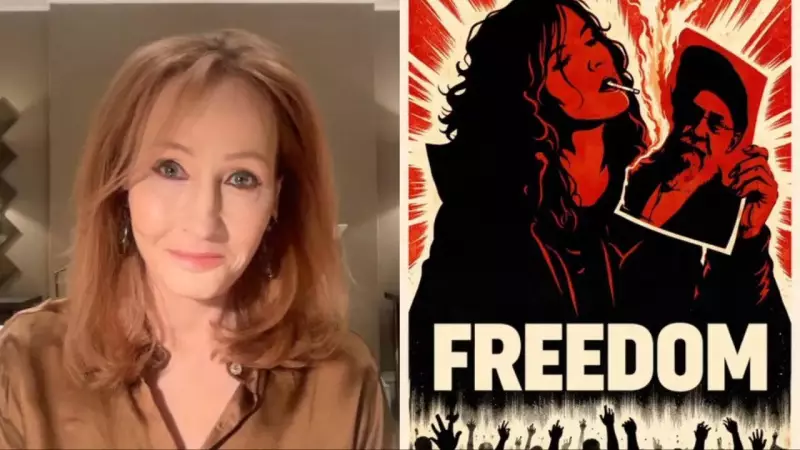
On January 11, 2026, Rowling took to her X (formerly Twitter) account to share a striking poster. The image featured a woman's caricature lighting a cigarette from the flames of a burning picture of Iranian Supreme Leader Ayatollah Ali Khamenei. Accompanying the visual was a pointed caption that quickly went viral.
"If you claim to support human rights yet can’t bring yourself to show solidarity with those fighting for their liberty in Iran, you’ve revealed yourself," Rowling wrote. She added, "You don’t give a damn about people being oppressed and brutalised so long as it’s being done by the enemies of your enemies."

Context: The Iran Protests and Global Solidarity
Rowling's intervention comes amid nationwide demonstrations across Iran. What began in late 2025 as protests against rampant inflation and economic collapse has expanded into a broader movement demanding political change. Reports from the ground detail a harsh crackdown, with hundreds of arrests and dozens of deaths as security forces attempt to suppress dissent.
Her tweet implicitly criticized the inconsistency in how global media and online activists champion human rights, suggesting that severe repression is often overlooked when it occurs in geopolitically inconvenient contexts. The message resonated with the 'Women, Life, Freedom' movement, a slogan that has become a global symbol of resistance against state oppression in Iran.
Divided Reactions and Accusations of Hypocrisy
The reaction to Rowling's post was sharply polarized. While many praised her for directing international attention to Iran's crisis, others launched scathing criticism, accusing her of "selective solidarity."
Critics were quick to highlight other global conflicts, notably the situation in Gaza. One netizen directly replied to her post, stating, "You *never spoke out for the plight of Palestinian women and children... you already revealed yourself as a hypocrite." Another user shared a modified version of her imagery, replacing Khamenei's picture with that of Israeli Prime Minister Benjamin Netanyahu, mirroring her own words back to her.
This backlash underscores a broader tension within global activist circles, where influential voices are often questioned for rallying around certain causes while appearing less vocal about others that don't align with dominant political narratives.
The debate sparked by Rowling's tweet illustrates the complex intersection of geopolitics, social movements, and digital activism. It forces a uncomfortable question: is global solidarity often shaped more by tribal digital cultures than by a principled, universal commitment to human rights? As the protests in Iran continue under a reported internet blackout, the world's divided response remains a testament to this ongoing dilemma.






