

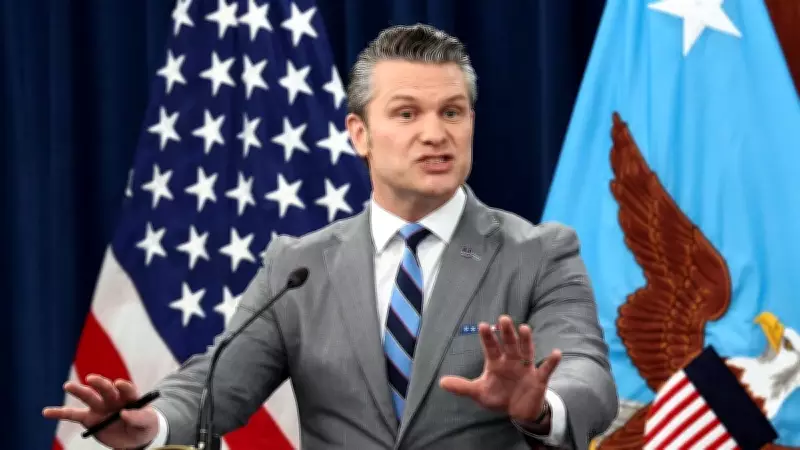
US Defense Secretary Pete Hegseth announced on Wednesday that the United States is expanding its naval blockade against Iran to a global scale, aiming to tighten restrictions on Iranian oil exports and curb its nuclear program. Speaking at a press conference at the Pentagon, Hegseth emphasized that the move is part of a broader strategy to counter Iran's destabilizing activities in the Middle East and beyond.
Global Enforcement Efforts
Hegseth stated that the US Navy, in coordination with allied nations, will intensify patrols and inspections of vessels suspected of carrying Iranian crude oil. "We are taking our blockade global. No nation should be allowed to profit from Iran's malign behavior," he said. The expanded operations will focus on key maritime chokepoints, including the Strait of Hormuz, the Bab el-Mandeb, and the South China Sea.
International Cooperation
The Pentagon chief highlighted that several countries have agreed to participate in the enhanced enforcement, although he did not name them. He noted that the initiative builds on existing efforts under the International Maritime Security Construct, which was established in 2019 to protect shipping in the Persian Gulf. The goal is to reduce Iran's oil revenue, which Hegseth described as "the lifeblood of its regime."

Reactions and Implications
Iranian officials have condemned the announcement, warning that such measures could escalate tensions in the region. The Iranian Foreign Ministry called the blockade "an act of aggression" and vowed to respond accordingly. Meanwhile, analysts suggest that the global blockade could lead to higher oil prices and increased friction with major importers of Iranian oil, such as China and India.
Strategic Context
The announcement comes amid ongoing negotiations over Iran's nuclear program and recent incidents involving Iranian seizures of commercial vessels. Hegseth reiterated the US commitment to ensuring freedom of navigation while isolating Iran economically. Critics argue that the blockade may violate international law, but the Pentagon maintains that it is a legitimate measure under the right of self-defense.
The expanded blockade is expected to be fully implemented within the next few months, with the US Navy deploying additional assets to support the mission. Hegseth concluded by urging all nations to support the effort, stating, "The choice is clear: stand with the United States and our allies, or stand with a regime that sponsors terrorism and threatens global security."






