

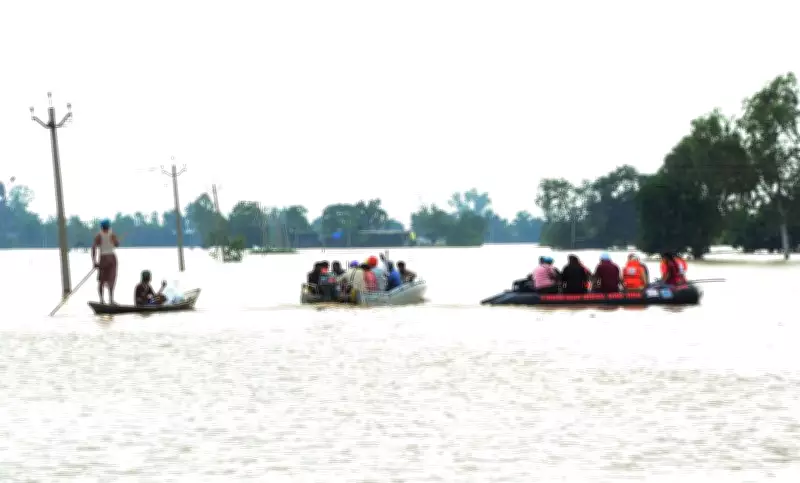
The devastating rains of 2025 in Punjab surpassed the catastrophic floods of 1988, leaving vast tracts of farmland buried under sand and sedimentary deposits. In response, the state government announced a scheme titled 'Jisda Khet, Usdi Ret' (whosoever owns the land shall own the sand), allowing landowners to desilt rivers and drains at their own expense and utilize the excavated material free of cost. While presented as a masterstroke, such initiatives mask the severe hardships that farmers have endured for decades.
A personal ordeal from 1967
Retired IAS officer Surinderjit Singh Sandhu recalls how, in 1967, a small canal along his family's land in Punjab breached, destroying the entire crop on 30 acres of his family's land and nearly 200 acres belonging to other farmers. Nearly three feet of sand and bhall (sedimentary deposits) covered the fields. His father, a government official, feared legal repercussions. Although no theft case was filed, a taiwan (penalty) case was registered under Section 70 of the Northern India Canal Act, 1873, against all landowners in the command area.
For the next 10 years, Sandhu's father traveled every two months to Abohar, 50 km from their village, to attend court hearings before the Executive Engineer, Irrigation (Collector). With limited means, he borrowed money from banks and relatives to reclaim the land by removing the sand. The family spent about Rs 30,000 over three years, a debt that took nearly 20 years to repay.

An astonishing discovery decades later
In 2006, while serving as Divisional Commissioner, Sandhu examined pending cases and listed them for regular hearing. To his astonishment, a canal-related case from his own village appeared before him. Five lawyers and three litigants were present. The Collector had imposed taiwan on all landholders, who had appealed to the Divisional Commissioner. Sandhu initially considered allowing the appeal and quashing the order as legally unsustainable. However, as an interested party, he recused himself and transferred the case to the Financial Commissioner (Revenue), requesting assignment to another competent court.
Six decades have passed since the 1967 floods, yet the case remains unresolved. Sandhu, now a retired IAS officer based in Amritsar, highlights that this is not an isolated incident. The 2025 floods have once again left farmers grappling with sand-covered fields, and the government's scheme, while well-intentioned, places the financial and physical burden of desilting on the farmers themselves.
Broader implications for Punjab's farmers
The never-ending struggle to reclaim land from flood damage reflects systemic issues in disaster management and legal redress. The accumulation of sand in fields has troubled farmers for generations, requiring lakhs of rupees to remove. The government's recent announcement allowing landowners to desilt at their own expense and keep the excavated material is reminiscent of past measures that failed to address the root causes. Sandhu's family spent Rs 30,000 (a substantial sum in the 1960s) and endured two decades of debt. The legal case, mired in bureaucratic delays, symbolizes the protracted suffering of farming communities.
As Punjab faces more frequent and severe floods due to climate change, the need for efficient rehabilitation and a streamlined legal process becomes critical. The 'Jisda Khet, Usdi Ret' scheme may offer temporary relief, but without systemic reforms, farmers will continue to bear the brunt of nature's fury and administrative inertia.






