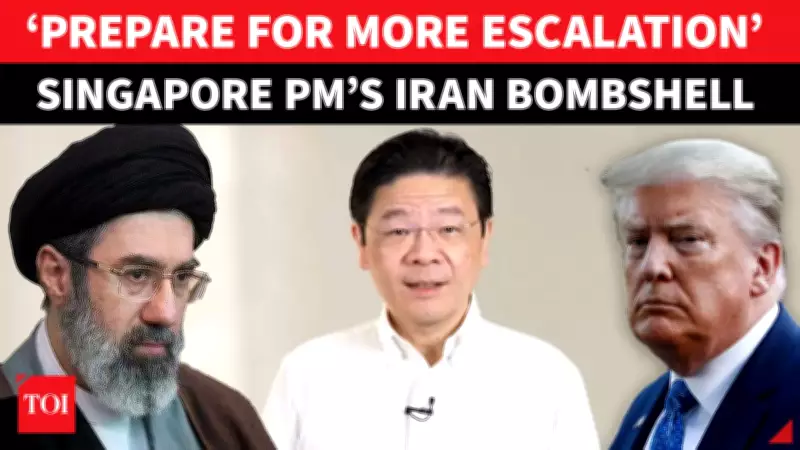
Singapore Prime Minister Lawrence Wong has issued a stark warning that escalating tensions involving Iran and the Strait of Hormuz could lead to widespread instability, economic turmoil, and global uncertainty. Speaking amid mounting concerns over regional escalation, Wong emphasized that any further conflict in the Gulf would have severe repercussions far beyond the Middle East, particularly affecting energy supplies, shipping routes, and international markets.
Critical Chokepoint for Global Oil
The Strait of Hormuz remains one of the world's most vital oil transit chokepoints, with approximately 20% of global petroleum consumption passing through its waters. Any disruption in this narrow waterway would have immediate and profound effects on global energy prices and supply chains. Governments and investors worldwide are closely monitoring the situation, as even temporary blockages could trigger economic shocks across continents.
Singapore's Call for Restraint
Singapore, a major global trade and shipping hub, has repeatedly called for restraint and diplomatic solutions to prevent further escalation. Wong stressed that the consequences of miscalculation or conflict would be catastrophic, not only for the region but for the entire global economy. He urged all parties to prioritize dialogue and de-escalation to avoid a crisis that could destabilize international markets for years to come.

The prime minister's remarks come as tensions between Iran and the United States continue to simmer, with recent reports of increased military posturing in the Gulf region. The Strait of Hormuz has been a flashpoint in previous conflicts, and the current situation has raised alarms among global leaders who fear a repeat of past disruptions.
Global Economic Impact
Analysts warn that a sustained closure of the Strait of Hormuz could lead to oil prices skyrocketing, triggering inflation and economic downturns worldwide. For energy-importing nations, particularly in Asia and Europe, the impact would be severe. Singapore, as a key transshipment hub, would also face significant disruptions to its port operations and trade flows.
Wong's warning underscores the interconnected nature of global security and economics, where a regional conflict can quickly spiral into a worldwide crisis. He called on the international community to work together to ensure the freedom of navigation and to prevent any actions that could lead to unintended escalation.
Diplomatic Efforts Underway
Diplomatic channels remain active, with several countries mediating between Iran and its adversaries. However, progress has been slow, and the risk of miscalculation remains high. The United Nations and other international bodies have urged all parties to exercise maximum restraint. Singapore's voice adds to the growing chorus of nations calling for peaceful resolution of the tensions.
In conclusion, Prime Minister Wong's alarm serves as a critical reminder that the stakes in the Gulf are not just regional but global. The world watches anxiously as events unfold, hoping for a diplomatic breakthrough that can avert a crisis with far-reaching consequences.