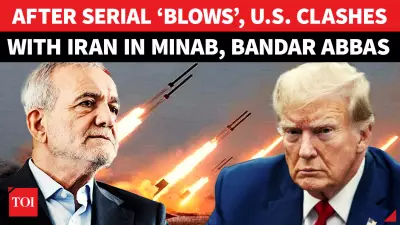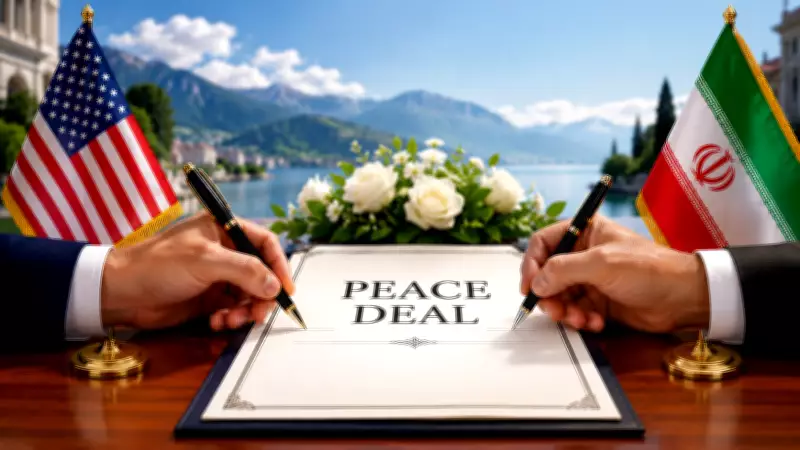
The United States and Iran are set to sign an interim memorandum of understanding on Friday, ending a conflict that has lasted over four months. The signing ceremony, to be held in Switzerland, will initiate 60 days of negotiations aimed at concluding the war and imposing strict constraints on Tehran's nuclear activities.
Key Provisions of the Draft Agreement
According to a draft of the agreement, Iran will be permitted to immediately resume oil exports and gain access to an economic development program worth at least $300 billion. This is part of broader efforts to reach a permanent peace deal addressing its nuclear program. The draft, not yet officially released, is being circulated by the US among allied nations at the G7 summit in France. A source familiar with the discussions told Reuters that technical details are still being finalized, and some language may change before the signing.
Oil and Uranium Concerns
The agreement outlines significant economic relief for Iran in exchange for ending its restrictions on the Strait of Hormuz and reaffirming that it will never seek a nuclear weapon. Upon signing, the US Treasury Department would issue waivers allowing exports of Iranian crude oil and petrochemical products, as reported by Bloomberg. The US would also end its naval blockade of Iranian ports, and both countries would work to restore maritime traffic through the Strait of Hormuz to pre-war levels within 30 days.

Oil markets have reacted sharply to the deal's expectations. Brent crude dropped below $78 a barrel, its lowest in over three months, and prices have fallen 15% over the past four trading sessions, the longest losing streak this year, due to anticipated increased global supplies from the reopening of the strait.
The draft does not directly address Iran's existing enriched uranium stockpile but states that its future will be addressed in a final agreement alongside other unresolved nuclear issues.
Financing Framework and Frozen Funds
Under the draft, the US and its regional partners would establish a framework to support Iran's rehabilitation and economic development with financing of at least $300 billion. The document also states that Iran's frozen funds will be released and made fully available, though no timetable is specified. A US official declined to discuss details but said Iran would only receive benefits if it fulfills obligations, including never obtaining a nuclear weapon, neutralizing enriched nuclear material, and ensuring freedom of navigation through the Strait of Hormuz.
Iran is seeking guarantees over access to its frozen assets. The semi-official Tasnim news agency quoted Central Bank Governor Abdolnaser Hemmati as saying Tehran would demand full assurance regarding effective access to those funds after the interim agreement is signed. Hemmati stated that American commitments to release Iranian assets are explicitly and actionably stated in the agreement.
Dispute Over $300 Billion Figures
US President Donald Trump previously denied that Washington would pay Iran $300 billion. The draft instead states that the US and its partners would ensure financing of that amount. One major challenge remains the conflict involving Israel and the Iran-backed Hezbollah. The draft states the war will be ended on all fronts, including Lebanon, requiring approval from Israeli Prime Minister Benjamin Netanyahu, who has refused to end Israel's campaign against Hezbollah along the northern border. Former Israeli Ambassador to the UK Mark Regev told Bloomberg that it is crucial for Israel to stay in southern Lebanon to clean up Hezbollah infrastructure. Iran's parliament speaker and chief negotiator Mohammad Bagher Ghalibaf said Israel must withdraw from occupied territories in Lebanon, according to the Mehr news agency.
The draft also provides for the eventual lifting of US sanctions on Iran, but only as part of a final agreement negotiated within the next two months. Additionally, the US would withdraw military forces from surrounding areas within 30 days of a final settlement.

Uncertainty Over Timeline
There remains uncertainty over when the agreement's text will be made public. Trump said it would be released after Friday's signing ceremony, while a senior US official said earlier this week that publication could come within days. The ceremony is expected at the Bürgenstock mountain resort overlooking Lake Lucerne, according to the Swiss foreign ministry. US Vice President JD Vance is expected to lead the American delegation, while Iran is likely represented by Ghalibaf.
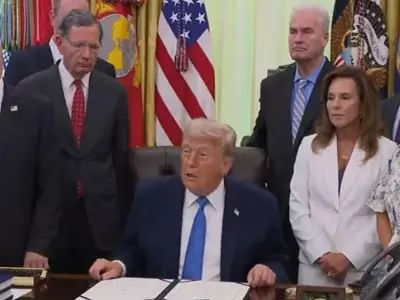
Speaking at the G7 summit, Trump described the agreement as a done deal that would prevent Iran from developing nuclear weapons. He also said the US would not pay war reparations or invest money in Iran, adding that Tehran's leaders have to prove themselves before any involvement.