

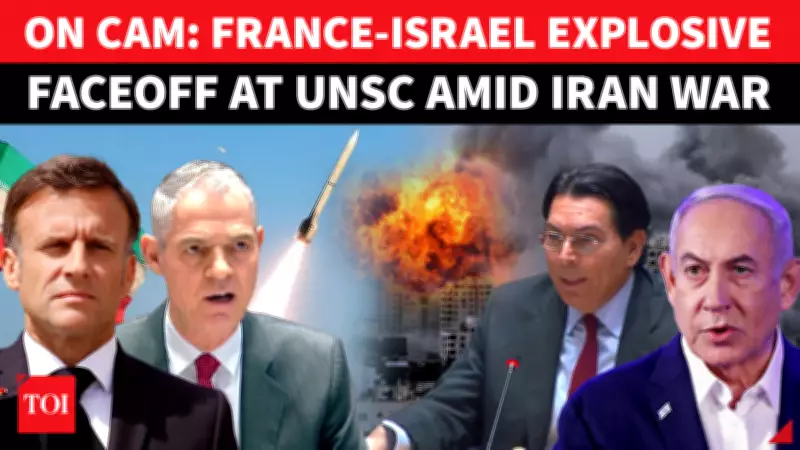
France and Israel Engage in Heated Diplomatic Confrontation at United Nations
A major diplomatic clash has erupted at the United Nations Security Council, with France launching a direct and forceful attack against Israel over allegations that Israeli Defense Forces posed serious threats to French peacekeepers serving in southern Lebanon. The incident has escalated tensions between the two nations and raised concerns about the safety of United Nations personnel in the region.
French Envoy Accuses Israel of Aggressive Behavior Against Peacekeepers
French ambassador Jerome Bonnafont delivered a blistering statement to the Security Council, accusing Israeli forces of what he described as "aggressive behaviour, intimidation, and direct threats" against French troops operating under the United Nations Interim Force in Lebanon (UNIFIL). The allegations stem from an incident in Naqoura where French personnel, including UNIFIL Chief of Staff Paul Sanzey, were reportedly held at gunpoint by Israeli forces despite established coordination protocols.
"The Security Council cannot be content with merely condemning these actions," Bonnafont declared during the heated session. "We demand concrete and immediate guarantees from Israel regarding the safety and security of our peacekeeping forces."

France has called for a comprehensive United Nations investigation into the incident and is pushing for stronger measures to protect UNIFIL personnel who have been deployed in southern Lebanon since 1978 to monitor the cessation of hostilities between Israel and Lebanon.
Israel Counters with Accusations of French Hypocrisy
Israeli envoy Danny Danon responded with equally strong language, flipping the narrative by accusing France of hypocrisy and double standards in its approach to Middle Eastern conflicts. Danon argued that Paris has been consistently soft on Iran and Hezbollah while unfairly targeting Israel at international forums like the United Nations.
"While France claims to be concerned about threats in Lebanon, they turn a blind eye to the real dangers posed by Iranian proxies and terrorist organizations operating in the region," Danon stated during the Security Council exchange. "This selective outrage undermines the credibility of France's position and reveals their biased approach to regional security issues."
Background of the UNIFIL Incident in Southern Lebanon
The diplomatic confrontation follows reports that French UNIFIL personnel were targeted at gunpoint in Naqoura, a coastal town in southern Lebanon that serves as UNIFIL's headquarters. According to sources familiar with the incident, the confrontation occurred despite prior coordination between UNIFIL and Israeli forces, raising questions about communication breakdowns and intentional violations of established protocols.
UNIFIL, which currently comprises approximately 10,000 peacekeepers from 46 countries, has faced increasing challenges in recent years as tensions between Israel and Hezbollah have escalated along the Blue Line demarcation between Israel and Lebanon. The force's mandate includes monitoring the cessation of hostilities, accompanying Lebanese armed forces, and supporting humanitarian activities.
Broader Implications for Regional Stability and UN Peacekeeping
This diplomatic clash comes at a particularly sensitive time for Middle Eastern stability, with multiple conflicts and proxy wars creating complex security challenges. The incident highlights the precarious position of UN peacekeepers operating in volatile border regions and raises fundamental questions about:
- The safety protocols for international peacekeeping forces
- Communication channels between UNIFIL and Israeli military forces
- The broader geopolitical tensions influencing France-Israel relations
- The effectiveness of UN mechanisms for protecting peacekeeping personnel
As both nations continue their diplomatic sparring at the United Nations, the international community watches closely to see whether this confrontation will lead to substantive changes in peacekeeping operations or simply become another chapter in the ongoing political battles that frequently play out in the Security Council chamber.

