

India's Strong Rebuttal to Pakistan's False Operation Sindoor Narrative at UN Security Council
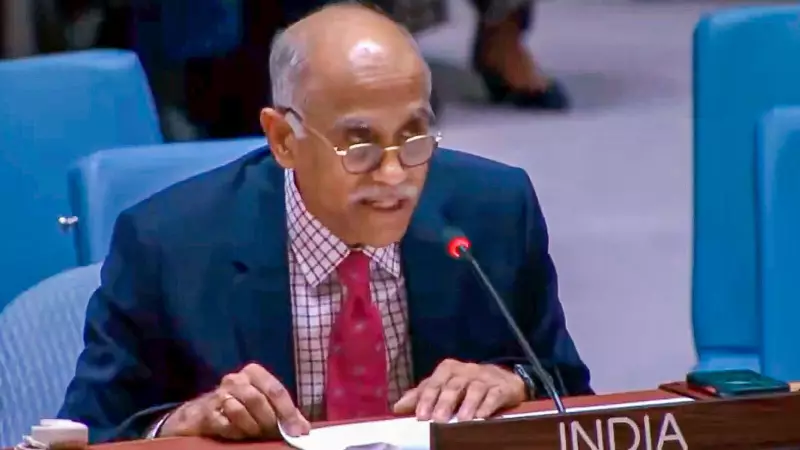
In a powerful address at the United Nations Security Council on Monday, India delivered a scathing condemnation of Pakistan's false and misleading claims regarding Operation Sindoor. Permanent Representative of India to the United Nations, Parvathaneni Harish, exposed what he described as Pakistan's self-serving account of the military operation that took place in May last year.
Exposing Pakistan's Contradictory Position
Harish presented a detailed timeline that contradicted Pakistan's version of events. "Till 9th of May, Pakistan was threatening more attacks on India. But on the 10th of May, the Pakistani military called our military directly and pleaded for a cessation to the fighting," the Indian diplomat revealed during the UNSC open debate on 'Leadership for Peace' at UN headquarters in New York.
The Indian representative emphasized that evidence of Operation Sindoor's impact remains publicly accessible. "The destruction caused to multiple Pakistani air bases by the Indian operation, including images of destroyed runways and burnt-out hangars, is in the public domain," Harish stated, challenging Pakistan's narrative with verifiable facts.

Condemning Pakistan's Terrorism Normalization Attempts
Harish strongly objected to Pakistan's attempts to normalize terrorism through diplomatic channels. "We have heard talk from the representative of Pakistan about the new normal. Let me reiterate again that terrorism can never be normalized as Pakistan wishes to do," he declared firmly.
The Indian official accused Pakistan, despite being an elected member of the Security Council, of pursuing a "single-point agenda to harm my country and my people." He emphasized that "it is not normal to tolerate Pakistan's continued use of terrorism as an instrument of state policy" and warned against allowing the UNSC to become a platform for legitimizing terrorism.
Reaffirming India's Sovereignty Over Jammu and Kashmir
Harish categorically rejected Pakistan's right to comment on India's internal matters, stating that Pakistan "has no locus standi" in such discussions. He reiterated India's unwavering position on Jammu and Kashmir, declaring that "The Union territory of Jammu and Kashmir has been, is, and will always remain an integral and inalienable part of India."
Addressing Violations of the Indus Waters Treaty
The Indian diplomat also addressed the longstanding Indus Waters Treaty, highlighting Pakistan's consistent violations. "India entered into the Indus Waters Treaty 65 years ago in good faith, in a spirit of goodwill and friendship," Harish recalled.
However, he detailed how Pakistan had betrayed this spirit through "three wars and thousands of terror attacks on India" over six and a half decades. "Thousands of Indian lives have been lost in Pakistan-sponsored terror attacks," he emphasized, explaining India's difficult decision regarding the treaty.
"India was compelled to finally announce that the treaty will be held in abeyance until Pakistan, a global epicentre of terror, credibly and irrevocably ends its support for cross-border and all other forms of terrorism," Harish stated, outlining India's principled position.
Calling for Pakistan's Internal Reflection
In his concluding remarks, Harish advised Pakistan to engage in serious introspection about rule of law and constitutional principles. He suggested Pakistan begin by examining "how it has let its armed forces engineer a constitutional coup through the 27th Amendment and giving lifetime immunity to its chief of defence forces."
India's comprehensive rebuttal at the UN Security Council represents a significant diplomatic effort to counter false narratives and uphold international principles against terrorism while protecting national sovereignty and interests.

