

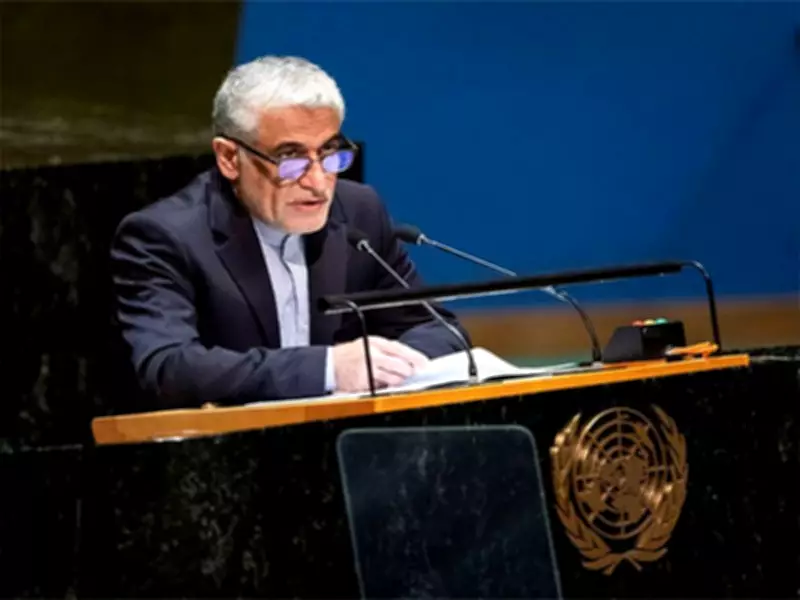
Iranian Diplomat Links Hormuz Strait Stability to Respect for National Rights
In a significant address at the United Nations, Iran's envoy has emphasized that achieving lasting and sustainable stability in the critical Hormuz Strait is fundamentally contingent upon the international community respecting Iran's sovereign rights. This statement comes against a backdrop of heightened regional tensions and ongoing global apprehensions regarding the security of one of the world's most vital maritime chokepoints.
The Geopolitical Significance of the Hormuz Strait
The Hormuz Strait, a narrow waterway connecting the Persian Gulf with the Gulf of Oman and the Arabian Sea, serves as a crucial artery for global energy supplies. Approximately one-fifth of the world's oil passes through this strategic passage, making its security a paramount concern for international trade and energy markets. The envoy's remarks underscore Iran's pivotal geographical position, as the nation borders the strait and wields considerable influence over its navigational safety.
Iran's Assertion of Sovereign Rights
The Iranian representative articulated that any framework for ensuring stability must acknowledge and uphold Iran's legitimate rights within its territorial waters and exclusive economic zone. This includes rights related to:

- Maritime sovereignty and control over adjacent waters.
- Economic interests, particularly concerning oil and gas resources.
- Security prerogatives to protect national borders and interests.
The envoy argued that disregarding these rights could lead to instability, as Iran views such actions as infringements on its national integrity and security.
Context of Regional Tensions
This declaration occurs amidst a complex geopolitical landscape characterized by:
- Ongoing diplomatic friction between Iran and several Western nations, including the United States.
- Historical incidents of maritime confrontations and seizures of vessels in the region.
- Broader regional rivalries involving Gulf states and international naval presences.
The Iranian envoy's statement can be interpreted as a reaffirmation of Iran's stance that cooperation, rather than coercion, is essential for maintaining open and secure sea lanes. It implicitly calls for dialogue and mutual respect as foundations for any sustainable security arrangement in the Hormuz Strait.
Implications for International Diplomacy
The envoy's remarks highlight a critical point in international relations: the interplay between national rights and global commons. For the international community, ensuring the free flow of commerce through the Hormuz Strait is a shared interest. However, Iran's position suggests that this cannot be achieved by sidelining its concerns. The statement serves as a reminder that sustainable stability requires addressing the security and economic interests of all regional stakeholders, with Iran positioning itself as an indispensable party in any lasting solution.
As tensions persist, the call for respecting Iran's rights adds another layer to the diplomatic discourse, potentially influencing future negotiations and security frameworks aimed at safeguarding this vital maritime corridor.

