

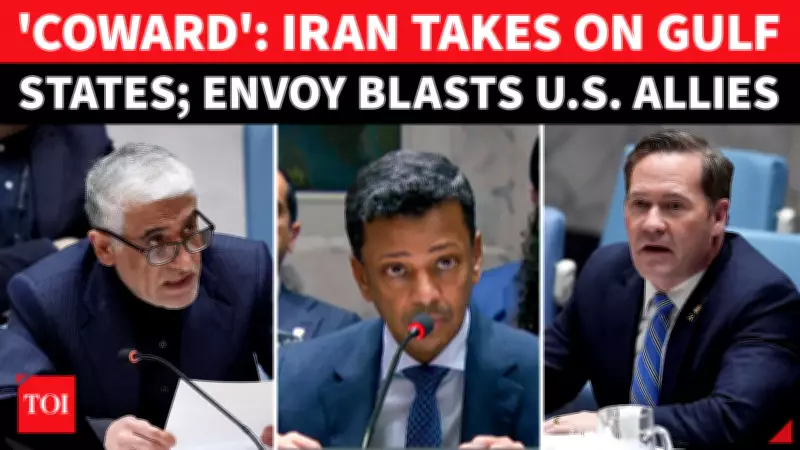
UNSC Showdown: Iran Envoy Blasts 'Coward' U.S. Allies in Heated Mideast Clash
In a dramatic session at the United Nations Security Council (UNSC), a resolution condemning Iran's military attacks on Gulf countries and Jordan was overwhelmingly adopted, sparking a fiery response from Tehran's representative. The resolution, which demands an immediate cessation of hostilities by Iran, was sponsored by the Gulf Cooperation Council (GCC) and received support from an unprecedented 135 co-sponsoring UN member states.
Overwhelming Support for Condemnation
On March 12, 2026, the UNSC voted with thirteen of its fifteen members in favor of the draft resolution. This significant majority underscores the international community's growing concern over escalating tensions in the Middle East. The resolution specifically targets Iran's recent aggressive actions, including attacks on strategic locations in Dubai, Bahrain, and Saudi Arabia, which have raised alarms about regional stability.
The Gulf Cooperation Council, representing key Arab nations, took the lead in proposing the measure, highlighting the collective stance of U.S. allies in the region. The broad co-sponsorship, involving over two-thirds of UN members, signals a rare consensus on the urgency of addressing Iran's military maneuvers.

Iran's Fiery Rebuttal
Following the vote, Iran's UN Ambassador, Amir-Saeid Iravani, addressed the Council in a charged speech. He expressed his "profound regret" at the adoption of the resolution, criticizing what he termed as the "cowardly" stance of U.S. Arab allies. Iravani's remarks pointed to deep-seated grievances, accusing these nations of aligning with Western powers against Iranian interests.
In his address, Iravani reiterated Iran's position that its actions are defensive responses to perceived threats, particularly from Israel and the United States. He emphasized that Tehran would continue to assert its sovereignty in the strategic Strait of Hormuz, a critical chokepoint for global oil shipments, where Iran has previously drawn "red lines" for U.S. and allied forces.
Broader Implications for Regional Security
The UNSC resolution comes amid a series of high-profile incidents that have intensified fears of a wider conflict:
- Recent attacks on Dubai's airport and business hubs, resulting in reported casualties.
- Missile strikes targeting Israeli capital areas, escalating tensions with Israel.
- Ongoing military engagements that have drawn criticism from international observers.
Analysts note that this diplomatic clash at the UNSC reflects the deepening divide between Iran and its regional rivals, with the United States' influence playing a pivotal role. The resolution's adoption may pressure Iran to reconsider its military strategies, though Tehran's history of defiance suggests continued volatility.
As global powers monitor the situation, the focus remains on whether diplomatic efforts can de-escalate the crisis or if further confrontations are inevitable. The UNSC's action marks a significant step in international condemnation, but its effectiveness in curbing hostilities will depend on subsequent negotiations and regional dynamics.

