

US Lawmakers Engage in Fierce Debate Over United Nations Reform and Leadership
A contentious and highly charged debate has erupted in Washington, D.C., as United States lawmakers from both sides of the aisle clash sharply over the future of the United Nations. This intense political confrontation exposes deep and fundamental divisions within the American government regarding critical issues such as institutional reform, financial funding mechanisms, and the strategic direction of global leadership. The unfolding drama centers on the impending departure of current UN Secretary-General Antonio Guterres, whose term is concluding soon, creating a pivotal vacuum in international diplomacy.
Republican Criticism and Democratic Defense of the United Nations
Republican voices in Congress have launched a blistering critique of the United Nations, characterizing the global body as inefficient, financially bloated, and systemically biased against American interests. They argue that the organization requires a comprehensive overhaul to streamline its operations and align its objectives more closely with U.S. priorities. In stark contrast, Democratic lawmakers have mounted a vigorous defense of the UN, emphasizing its indispensable role in fostering global cooperation on issues like climate change, public health, and conflict resolution. They contend that active American participation and leadership within the UN are vital for maintaining U.S. influence and shaping international norms on the world stage.
Ambassador Michael Waltz Signals Major Policy Shift
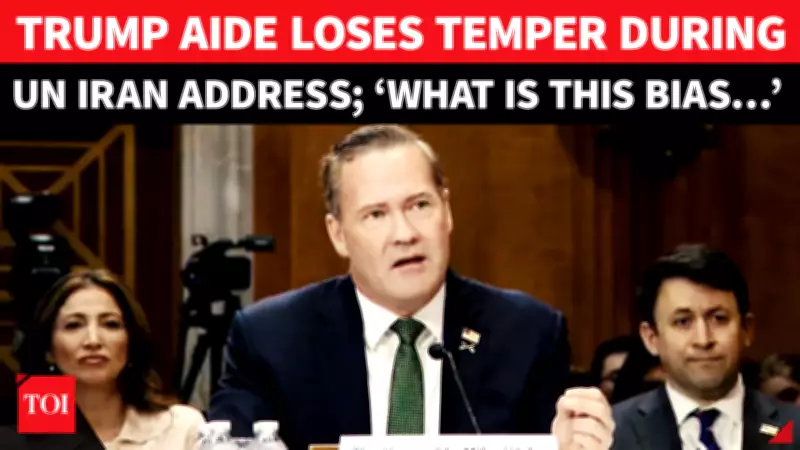
Ambassador Michael Waltz, a prominent figure in the debate, has signaled a significant and potentially transformative shift in U.S. policy toward the United Nations. Waltz is insisting unequivocally that the next Secretary-General must be a leader who aligns closely with American values and strategic interests. This demand represents a clear move toward a more assertive and America-first approach in multilateral diplomacy. Waltz's stance underscores a growing sentiment among certain political factions that the United States should leverage its influence to ensure the UN leadership reflects and advances U.S. geopolitical goals, rather than operating as a neutral or independent entity.

Implications for Global Diplomacy and America's Role
The ongoing leadership battle for the next UN Secretary-General has profound implications that could fundamentally reshape global diplomacy and redefine America's role within multilateral institutions worldwide. The outcome of this political struggle will determine whether the United Nations continues on its current path or undergoes a substantial reorientation under potential new leadership that is more sympathetic to U.S. directives. This debate is not merely an internal American political issue; it resonates across international borders, affecting alliances, global governance structures, and the future of cooperative international efforts on pressing global challenges.

- Republican lawmakers criticize the UN as inefficient and biased, demanding major reforms.
- Democratic lawmakers defend the UN as crucial for global cooperation and U.S. influence.
- Ambassador Michael Waltz pushes for a pro-America leadership shift in the UN.
- The debate centers on the upcoming selection of a new Secretary-General as Antonio Guterres steps down.
- The outcome could significantly impact global diplomacy and America's multilateral role.
