

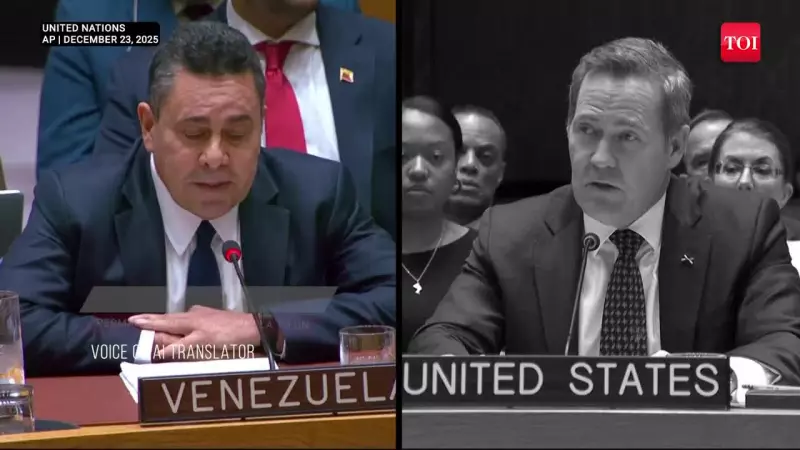
Tensions between the United States and Venezuela erupted dramatically at the United Nations headquarters, with Caracas's representative launching a blistering verbal attack on Washington. During an urgent UN Security Council briefing convened on December 24, 2025, Venezuela's ambassador categorically rejected recent American actions, labelling US officials as "American Extortionists."
A Fiery Confrontation Over Caribbean Peace
The emergency session was called to address what was presented as a potential threat to international peace and security. The Venezuelan delegation, led by its UN envoy, found the very premise of the meeting outrageous. The envoy forcefully argued that it was "absurd" for the United States to invoke rules of war or frame the situation as a security crisis.
Venezuela's core argument was that there is no armed conflict occurring in the Caribbean region, and thus, Washington's manoeuvres lack legal and factual foundation. The confrontation highlighted the deep diplomatic chasm between the government of President Nicolás Maduro and the United States.

The Context of the High-Stakes Clash
This explosive diplomatic faceoff did not occur in a vacuum. It comes against a backdrop of recent naval incidents and escalating rhetoric. Reports indicate the US Navy has been involved in chasing Venezuelan oil tankers, like the BELLA-1, in the Caribbean, which Caracas views as acts of economic aggression. Venezuelan officials and supporters have previously branded former US President Donald Trump an "Oil Thief."
Furthermore, the US administration has reportedly presented the Maduro government with a stark set of options, to which Maduro issued a sharp, one-line rebuttal. This UN session became the global stage for airing these grievances, transforming a procedural meeting into a spectacle of geopolitical discord.
Implications and the Road Ahead
The direct accusation of "American Extortionists" marks a significant escalation in diplomatic language. It signals Venezuela's strategy to frame the economic and political pressure from Washington as illegitimate coercion on the world stage. This move aims to garner sympathy from other nations and challenge the US narrative directly within the UN's premier body for international security.
The fallout from this confrontation is likely to further freeze any prospects of near-term dialogue between the two nations. It also sets a combative tone for Venezuela's international engagements, particularly as it seeks alliances with other nations critical of US foreign policy. The event underscores how regional disputes are increasingly being fought in the arena of global diplomacy, with the UN serving as the battleground for narrative control.

