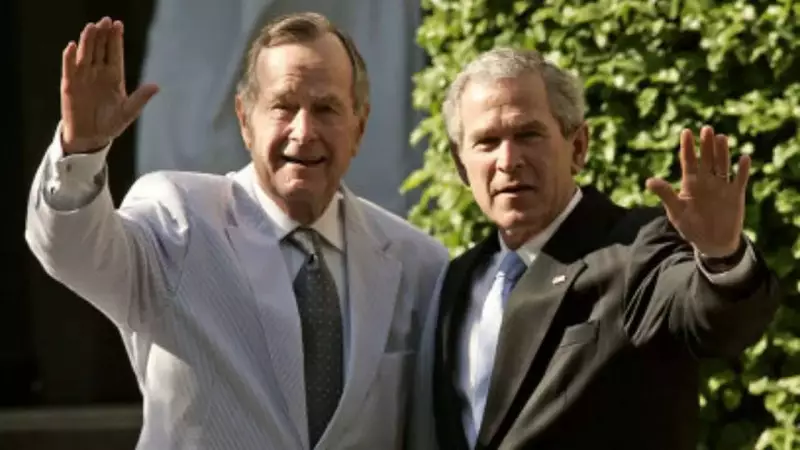
In the entire history of the United States, a unique political achievement has been recorded only twice: a father and his son both ascending to the nation's highest office. The first pair, John Adams and John Quincy Adams, helped forge the young republic. Centuries later, George H.W. Bush and George W. Bush led in the modern era. While the Adams legacy is preserved in history books and museums, the Bush family continues to actively shape public life and discourse well into the year 2025.
The Founding-Era Duo: The Adamses
John Adams, the 2nd President of the United States, steered the fragile nation through its formative post-Revolutionary War years. His son, John Quincy Adams, the 6th President, was instrumental in crafting early American foreign policy. After his presidency, he became a formidable force in Congress, notably in the pivotal fight against slavery.
Though both men died in the 1800s, their contributions are kept alive today through dedicated preservation efforts. Institutions like the Adams National Historical Park and ongoing academic research into early U.S. diplomacy ensure that this father-son duo remains a cornerstone of American historical memory and scholarly study.

The Modern Legacy: George H.W. Bush in 2025
George H.W. Bush, the 41st president, passed away in 2018, but his influence is experiencing a notable resurgence in 2025. A key event driving this is the planned reopening of the Bush Gallery at the National Museum of the Pacific War. This major exhibition is dedicated to his heroic service as a naval aviator during World War II.
The revamped gallery has sparked renewed public and historical interest in his military bravery and his presidential leadership during the delicate transition at the end of the Cold War. Experts note that the exhibit refreshes discussions about his diplomatic skill, his commitment to coalition-building, and his brand of statesmanship, proving his legacy still resonates with contemporary issues.
The Active Patriarch: George W. Bush Today
The most visibly active member of these presidential lineages in 2025 is George W. Bush, the 43rd president, now 79. He leads a life away from the political fray but remains impactful through sustained public service and philanthropy.
His primary vehicles for influence are the George W. Bush Presidential Center and the Bush Institute in Dallas. Through these platforms, he continues to advance causes central to his tenure and post-presidency, including supporting veterans' reintegration, driving global health initiatives, pushing for education reform, and promoting freedom and democracy around the world. He regularly engages with policy experts, veteran organizations, and health partners, shaping important conversations without stepping back into the political arena.
On a personal level, Bush maintains a disciplined routine. Family sources reveal he starts each day with a phone call to a lifelong friend, emphasizing his value for deep, personal connections after the presidency. He has also continued his well-known passion for painting, often donating his artwork to raise funds for veteran-related charities. His public appearances are selective but meaningful, focusing on civic events, military ceremonies, and gatherings that encourage bipartisan dialogue.
The stories of these two families highlight a fascinating thread in American governance. One is enshrined in the nation's founding narrative, while the other demonstrates how a presidential legacy can actively evolve and contribute to society long after leaving the White House.