Architects and Design Experts Raise Alarm Over Trump's White House Ballroom Proposal
Architects and design professionals have voiced significant concerns regarding US President Donald Trump's controversial plan to construct a new White House ballroom. They warn that the proposal contains major design flaws and poses a serious risk of altering one of America's most historic and iconic buildings.
Costly Project Faces Widespread Criticism
The ballroom addition, estimated to cost between $300 million and $400 million, is slated to replace the demolished East Wing of the White House. This move has drawn sharp criticism from architectural experts who argue the design is both impractical and disruptive to the site's historical integrity.
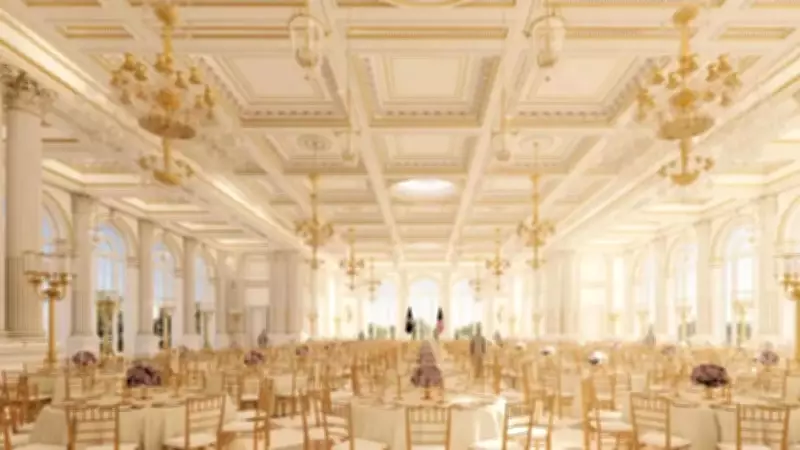
Several architectural critics have pointed to specific features in the plans that they deem nonsensical. These include "fake windows on the north side," interior columns that obstruct views within the space, staircases that lead nowhere, and an excessively large rooftop area. These flaws were detailed in a comprehensive report published by The New York Times, which examined mock-ups of the ballroom ahead of a crucial vote by the National Capital Planning Commission scheduled for April 2.

Disruption to Historic Symmetry and Rushed Process
The National Capital Planning Commission is responsible for reviewing major changes to federal property, including the White House grounds. Experts note that the proposed ballroom will be more than three times the size of the main White House residence, which would disrupt the historic symmetry of the presidential home.
The Times report, citing architectural experts, highlighted that "the hurried reviews, with construction cranes already swivelling above the White House grounds, are an abrupt departure from how new monuments, museums and even modest renovations have been designed and refined in the capital for decades." The East Wing was demolished in October 2025 to make way for the project, a move that sparked controversy as it occurred before full planning approval had been secured.
Overwhelming Public Opposition and Professional Condemnation
Public opposition to the ballroom plan has been exceptionally strong. A review of comments submitted to planning bodies revealed that approximately 98 percent of more than 32,000 public responses opposed the proposal, describing it as overly large and inappropriate for the historic site.
Among the prominent voices of dissent, Kate Schwennsen, a former national president of the American Institute of Architects, stated that the design was so flawed that students submitting similar work would have failed academically. This underscores the professional community's severe reservations about the project's architectural merit.
Political Support and Legal Challenges
Despite the criticism, Trump's supporters in the planning commission and his political base have pushed the project forward. The White House has asserted that the ballroom will be privately funded using donors' money, with no expense to taxpayers. However, preservation groups have raised legal challenges, arguing that proper review processes and congressional approval were bypassed in the rush to proceed.
White House Response to Criticism
White House press secretary Karoline Leavitt responded to the criticism by defending the project and questioning the credibility of its detractors. In a post on X, she criticized The New York Times report, stating: "The New York Times had three random people who have 'studied fine arts,' 'long written about urban planning,' and never built anything to write an article criticizing the new White House ballroom."
Leavitt added: "President Trump and his lead architect have built world-class buildings around the world, and they are ensuring the People’s House finally has a beautiful ballroom that’s been needed for decades — at no expense to the taxpayer." This response highlights the ongoing tension between the administration's vision and the concerns of architectural experts and the public.
The debate over the White House ballroom continues to intensify as the planning commission's vote approaches, with significant implications for the preservation of national heritage and the standards of architectural design in federal projects.