

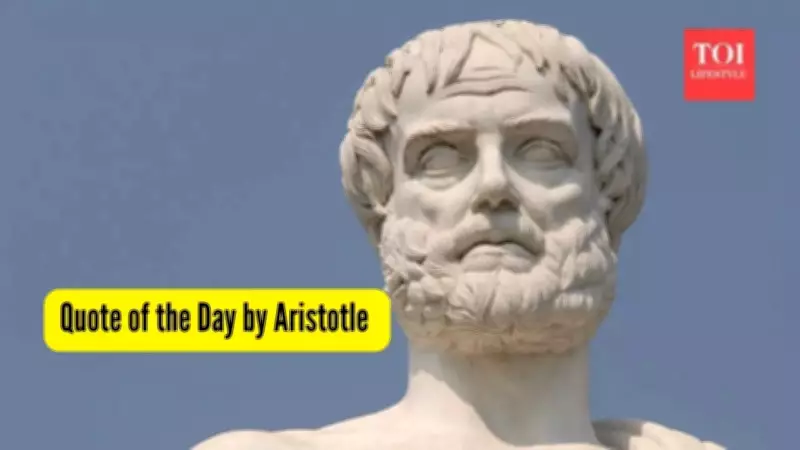
Aristotle: The Revolutionary Thinker Who Transformed Human Knowledge
Aristotle stands as one of the most pivotal and influential thinkers in the entire history of human civilization. His profound ideas fundamentally reshaped the fields of philosophy, science, politics, and education, leaving an indelible mark that has endured for over two millennia. Born in 384 BCE in the modest Greek city of Stagira, Aristotle grew up during an era of burgeoning intellectual curiosity, where people increasingly questioned the nature of the world and human existence.
Early Life and Formative Influences
Aristotle's father, Nicomachus, served as the personal physician to the king of Macedonia, a position that likely ignited Aristotle's early fascination with science and biology. This foundational interest in empirical observation and natural phenomena would remain a cornerstone of his intellectual pursuits throughout his life. At approximately seventeen years of age, Aristotle journeyed to Athens, the epicenter of Greek philosophical thought, to study at the Academy founded by Plato. This move represented a significant turning point, immersing him in an environment ripe for intellectual exploration.
Academic Journey and Philosophical Departure
Aristotle spent nearly two decades at Plato's Academy, initially as a dedicated student and later as a respected teacher. Despite his deep respect for Plato, Aristotle did not merely echo his mentor's teachings. Plato advocated for the existence of perfect, immutable "Forms" that transcend the physical realm. In contrast, Aristotle developed a philosophy firmly rooted in observable reality. He believed that true knowledge could be acquired through careful examination of the tangible world, rather than solely through abstract contemplation. This fundamental divergence marked the genesis of Aristotle's own distinct philosophical path.

Teaching Alexander the Great and Founding the Lyceum
Following Plato's death, Aristotle departed Athens and embarked on several years of travel. A particularly notable chapter in his life was his appointment as tutor to a young prince who would later become Alexander the Great. This role afforded Aristotle considerable influence and opportunity, though the exact extent of his impact on Alexander's worldview remains debated. Nonetheless, their association is celebrated as one of history's most iconic teacher-student relationships. Aristotle eventually returned to Athens and established his own institution, the Lyceum. Distinguished from Plato's Academy, the Lyceum emphasized empirical research, including data collection, natural observation, and systematic knowledge organization. Aristotle and his disciples often engaged in philosophical discussions while walking the grounds, earning them the nickname the "Peripatetic" school, derived from the Greek term for "to walk around."
Major Contributions Across Disciplines
Aristotle's intellectual output was remarkably vast, encompassing numerous critical contributions across multiple domains. In philosophy, he made seminal advances in logic, ethics, metaphysics, and political theory. Often hailed as the "father of logic," Aristotle developed the first formal system of reasoning, known as syllogistic logic. While seemingly elementary today, this framework was revolutionary in its time and served as the bedrock of logical thought for centuries. His ethical theories remain widely discussed, most notably the concept of the "Golden Mean," which posits that virtue resides as a midpoint between two extremes—for instance, courage as the balance between recklessness and cowardice. Aristotle argued that the ultimate aim of human life is to achieve "eudaimonia," commonly interpreted as happiness or flourishing.
In political theory, Aristotle analyzed various forms of governance, including monarchies, aristocracies, and democracies, assessing their respective merits and drawbacks. He famously described humans as "political animals," asserting that our nature is inherently social. His seminal work, Politics, continues to be a foundational text in political philosophy, offering insights that remain relevant in contemporary discussions on citizenship and statecraft.

Enduring Legacy and Historical Context
Aristotle's influence persisted long after his death in 322 BCE. His writings were preserved and later rediscovered by scholars in the Islamic world and medieval Europe, becoming integral to academic curricula, particularly within universities. Figures like Thomas Aquinas synthesized Aristotle's ideas with Christian theology, underscoring his profound impact on the history of thought. However, it is crucial to acknowledge that Aristotle was also a product of his time. Some of his views, such as those concerning slavery or the status of women, reflect the limitations of ancient Greek society. Recognizing these flaws does not diminish his monumental achievements but rather provides a balanced perspective on his legacy.
In summary, Aristotle's legacy is immense and multifaceted. He revolutionized our approaches to science, ethics, politics, and logic, with his ideas continuing to be studied in educational institutions globally. His life exemplifies the power of curiosity and disciplined inquiry, demonstrating that through meticulous observation and rational analysis, we can advance our understanding of the world. Aristotle was not merely an isolated philosopher; he was an engaged teacher, researcher, and thinker whose journey from a small Greek town to becoming one of history's greatest intellects illustrates how questioning, exploration, and the courage to think independently can illuminate human knowledge.





