China Surges Ahead in Nuclear Submarine Construction, Challenging US Naval Dominance
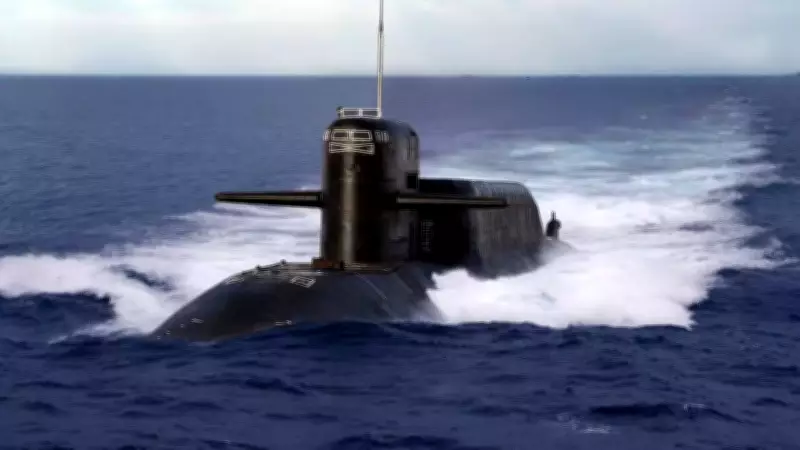
China has dramatically accelerated the production of its nuclear-powered submarines over the past five years, surpassing the United States in new vessel launches and eroding a long-standing maritime advantage held by Washington. This significant development is detailed in a comprehensive report by the International Institute for Strategic Studies, a leading global defense think tank.
Quantifying the Shift: China's Production Surge
The expansion of the People's Liberation Army Navy's nuclear submarine fleet encompasses both ballistic-missile and attack submarines. According to the IISS assessment, between 2021 and 2025, China launched and commissioned 10 nuclear submarines, outpacing America's seven new vessels during the same period.
In terms of total tonnage, China also led decisively with 79,000 tonnes compared to the US total of 55,500 tonnes. This represents a remarkable reversal from the 2016 to 2020 timeframe, when China added just three submarines with a combined displacement of 23,000 tonnes, while the United States brought seven new submarines into service totaling 55,500 tonnes.

The Current Balance of Nuclear Submarine Forces
Despite China's recent production surge, the United States maintains a substantial overall advantage in operational nuclear submarines. According to the IISS publication Military Balance 2025, as of early 2025, China was operating 12 nuclear-powered submarines. This fleet comprises six ballistic-missile boats and six guided-missile or attack submarines.
By contrast, the US Navy possessed 65 submarines in total, including 14 ballistic-missile boats. It is important to note that the reported figures reflect vessels launched rather than fully completed and deployed.
Infrastructure Expansion and Production Challenges
To support its growing nuclear submarine program, Beijing has significantly expanded the Huludao shipyard operated by Bohai Shipbuilding Heavy Industry Co in northern China. The IISS report, titled "Boomtime at Bohai," highlights the rapid pace of construction at this critical facility.
Meanwhile, concerns are mounting in Washington over production delays. A recent US Congressional Research Service study noted that the US Navy is falling short of its target to build two Virginia-class attack submarines annually. Since 2022, American shipyards have delivered between 1.1 and 1.2 submarines per year.
The US is also developing the Columbia-class ballistic-missile submarines, but this program is running at least a year behind schedule. The first vessel in this class, USS District of Columbia, is not expected to be delivered until 2028, according to remarks made to Breaking Defence by the admiral overseeing the project.
Broader Naval Expansion and Strategic Implications
China's naval expansion extends well beyond submarines alone. According to a recent BBC report, China now operates 234 warships, compared with 219 in the US Navy, making it the largest navy in the world by vessel count.
Research by the Centre for Strategic and International Studies reveals that between 2019 and 2023, China's four major shipyards in Dalian, Guangzhou, Jiangnan and Hudong-Zhonghua constructed 39 warships with a combined displacement of 550,000 tonnes. In 2025 alone, the Chinese navy added 11 combat vessels, including the aircraft carrier Fujian.
The IISS report warns that "the greater numbers in the water present a growing challenge to (the US and other Western) countries as they struggle to increase their own output."
Conventional Forces and International Partnerships
China also maintains a substantial fleet of conventionally powered submarines, numbering 46 vessels. The United States operates no conventional submarines, relying exclusively on nuclear propulsion for its underwater fleet.
Beijing is simultaneously strengthening defense ties with regional partners through naval platform transfers. In December last year, China launched the fourth Hangor-class submarine, named Ghazi, for the Pakistani Navy, demonstrating its expanding maritime influence beyond its immediate waters.

This comprehensive naval buildup, occurring against a backdrop of US production challenges, represents one of the most significant shifts in global maritime power dynamics in recent decades. While the United States retains qualitative and quantitative advantages in operational nuclear submarines, China's accelerated production capacity and broader naval expansion are narrowing the gap at an unprecedented pace.