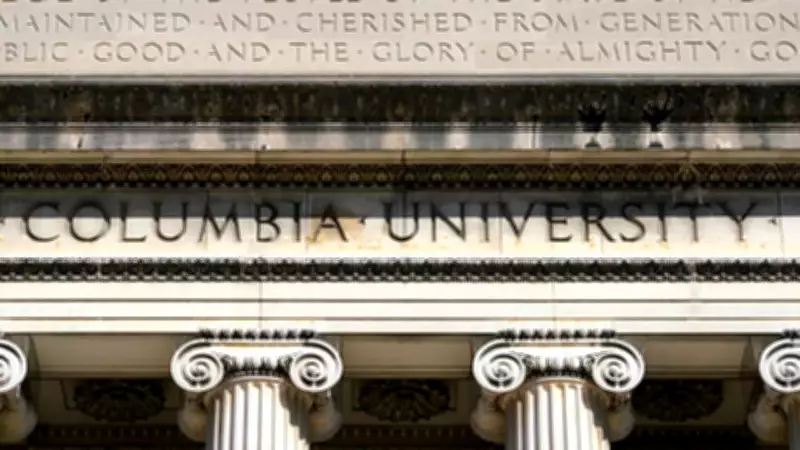
Columbia University Ranks Among Top 10 US Institutions with $1.2 Billion in Foreign Funding Disclosures
Columbia University has emerged as one of the top ten universities in the United States receiving substantial foreign funding, with total disclosures reaching an impressive $1.2 billion as of January 31, 2025. This critical information comes from a newly launched data dashboard released by the US Department of Education on January 2, 2025, providing unprecedented transparency into international financial contributions to American higher education institutions.
Federal Scrutiny and Compliance Measures Intensify
According to comprehensive reporting by The Columbia Spectator, the majority of this substantial funding originates from two primary sources: China and England. This revelation has reignited significant attention and debate surrounding foreign donations to American universities, particularly following recent federal scrutiny and the implementation of new compliance measures introduced during President Donald Trump's administration.
What federal law requires: Under Section 117 of the Higher Education Act of 1965, all US colleges and universities are legally mandated to report foreign gifts or contracts valued at $250,000 or more. These disclosure requirements apply comprehensively to funds received from foreign governments, international organizations, or individual donors outside the United States.

Columbia's Compliance Agreement and Federal Oversight
As documented by The Columbia Spectator, Columbia University has faced persistent government scrutiny regarding its foreign affiliations and funding sources for several years. In a significant development in July 2025, the university entered into a substantial $221 million agreement with the Trump administration. As a crucial component of this agreement, Columbia committed to full compliance with federal foreign gift reporting requirements and pledged to respond promptly to all lawful government requests concerning funding sources.
A university spokesperson explicitly stated to The Columbia Spectator that Columbia University maintains full compliance with Section 117 reporting regulations. This assurance comes following President Trump's executive order signed in April 2025, which mandated stricter enforcement of disclosure requirements, with the administration noting that the law had not been rigorously enforced in previous years.
Other prominent institutions including Cornell University and Northwestern University have also entered into similar compliance agreements with federal authorities, indicating a broader trend of increased oversight across American higher education.
Detailed Breakdown of Columbia's Foreign Funding Structure
According to the comprehensive Department of Education dashboard, Columbia's foreign funding distribution reveals several important patterns:
- 39 percent of Columbia's foreign funding arrived as unrestricted gifts, providing the university with maximum flexibility in allocation.
- 22.1 percent came from restricted gifts, where donors specify particular uses for their contributions, though the university retains financial and administrative control over these designated funds.
- Contracts constitute the remaining portion, with approximately 22.4 percent supporting faculty positions, academic programs, and student financial aid initiatives.
- The final 16.4 percent originated from various other types of contracts with international entities.
International Student Impact and Economic Contribution
International students represent a remarkable 39 percent of Columbia University's total student body—the highest proportion among all Ivy League institutions. A detailed analysis conducted by The Wall Street Journal estimated that international students contributed approximately $903 million to the university's economy in 2023 alone, highlighting the significant financial impact of global enrollment alongside direct foreign funding.

Qatar Funding Controversy and Global Expansion
Foreign funding in American universities has attracted considerable criticism in recent years, with particular focus on contributions from Qatar. According to comprehensive federal data, Qatar has contributed nearly $6.6 billion to American educational institutions—the highest amount among all foreign nations. Several universities receiving even greater funding than Columbia operate branch campuses within Qatar itself.
A June 2024 report published by the Institute for the Study of Global Antisemitism and Policy alleged undisclosed Qatari funding to Columbia University. However, a university official categorically told The Columbia Spectator that Columbia has not received any Qatari funding meeting the mandatory reporting threshold and characterized the report's claims as fundamentally inaccurate.
Columbia has simultaneously expanded its global footprint through the establishment of 10 Global Centers worldwide. Following the cancellation of $400 million in federal grants in March 2025, the university agreed to implement new commitments, including launching specialized programming at its Tel Aviv Global Center.
Expert Perspective on Transparency and Academic Independence
Academic experts emphasize that transparency remains paramount in managing foreign funding relationships. Alexander Cooley, a distinguished professor at Barnard College, provided crucial insight to The Columbia Spectator, stating that foreign funding is generally acceptable provided it does not compromise academic independence and maintains complete transparency throughout the process.