Columbia University Faculty and Students Arrested in Immigration Protest
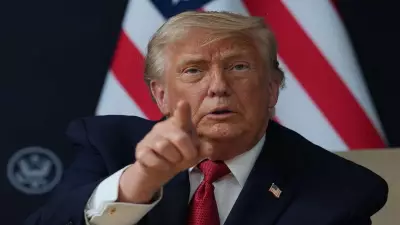
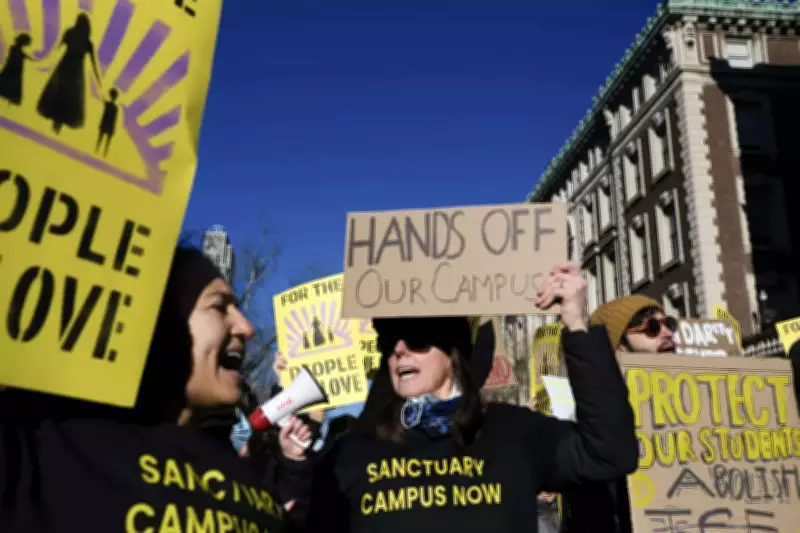
In a dramatic display of civil disobedience, twelve faculty members, staff, and students affiliated with Columbia University were arrested on Thursday afternoon after blocking traffic on Broadway. The protest was organized to oppose President Donald Trump's immigration crackdown and to demand stronger protections for international students at the university.
Protesters Demand Sanctuary Campus Status
The protesters, wearing matching shirts that read "Sanctuary Campus Now," sat in a crosswalk for nearly an hour, calling on Columbia University to provide enhanced safeguards for its international student community. Police officers issued repeated warnings before making the arrests shortly before 4 PM. The response was measured, with no large police presence, unlike earlier demonstrations around the campus over the past two years.
Among those arrested was Mila Rosenthal, 58, an adjunct professor of international and public affairs, who described her decision as an act of civil disobedience. "We're seeing what's happening in Minneapolis, just all of that terror that Immigration and Customs Enforcement is sowing there," Rosenthal said before her arrest, referring to recent events. "And there's no reason that Columbia can't say, 'This ends here.'"

Rosenthal emphasized the fear and uncertainty felt by international students at the university. "This is a terrifying time to be in the United States, no matter your visa status, and they feel very vulnerable," she added.
Escalation After Months of Vigils
The protest drew about 150 participants at its peak and was organized in part by CU Stands Up, a group of faculty and staff members that has held weekly vigils opposing ICE outside Columbia's gates for approximately 40 weeks. Protest organizers stated they escalated their actions this week in response to recent events in Minneapolis and elsewhere, including the killing of two United States citizens by federal agents.
Charges and Release Details
As of Thursday evening, the New York Police Department had not released detailed charges. However, organizers reported that those arrested were charged with refusal to disperse and blocking vehicular traffic. They were released within a few hours and instructed to appear in court on February 23.
Criticism of University's Earlier Response
Jennifer S. Hirsch, a professor of sociomedical sciences at Columbia's Mailman School of Public Health who was also arrested, criticized the university's earlier response to federal authorities. "Columbia was the test case for this government strategy of kidnapping people first and then asking questions later," Hirsch told The New York Times. She argued that the university's handling of the arrest of Mahmoud Khalil, a Columbia graduate, and other student activists last spring had emboldened the administration.
Campus Climate and Unresolved Concerns
After a wave of protests that began in 2023 and extended into early 2025, Columbia's campus has been quieter in recent months. The university has tightened protest policies and restricted public access to its main campus. Simultaneously, some students and faculty have expressed concerns over a deal reached with the Trump administration to restore research funding and over the extent of the university's cooperation with immigration authorities during earlier arrests.
Persistent Student Fears
"I have a lot of friends who are international students, and I know that they worry about walking down the streets and carrying their documentation," said Rina Isaac, 20, a junior who attended the protest. "All my friends should be protected and feel like they belong on campus," she added, according to The New York Times.
Columbia officials have stated that the university operates within the law while seeking to support international students. In a statement, Samantha Slater, a university spokeswoman, clarified that Columbia does not collaborate with immigration enforcement agencies. "No member of Columbia leadership or the board of trustees has ever requested the presence of ICE agents on or near campus," Slater said. "This is a completely false assertion."