

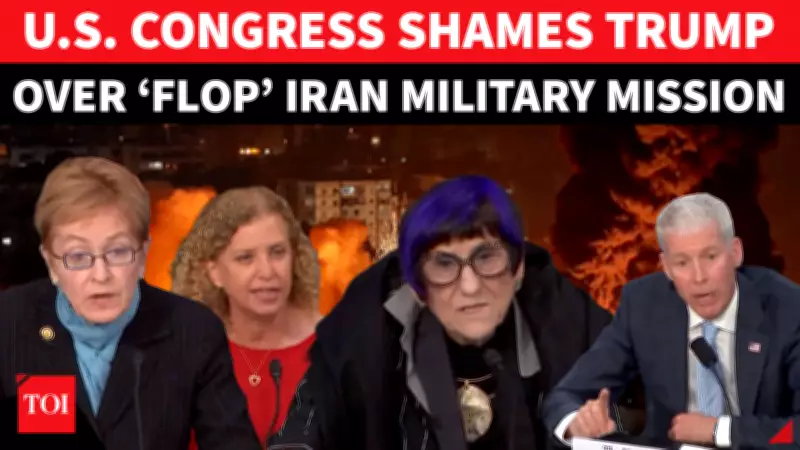
Congressional Showdown Over Iran Policy and Soaring US Fuel Prices
A major political confrontation erupted in Washington as US Energy Secretary Chris Wright faced intense questioning from Democratic lawmakers during a high-stakes House committee hearing. The focus of the heated exchange was the dramatic surge in American fuel prices, which lawmakers directly attributed to escalating military tensions with Iran.
Lawmakers Blame Iran Actions for Fuel Price Spike
Prominent Democratic leaders including Representatives Marcy Kaptur and Rosa DeLauro launched sharp criticism against the administration's foreign policy decisions. They presented compelling evidence linking recent military maneuvers in the Persian Gulf region to what they termed a "fuel price fiasco" affecting American consumers nationwide.
The current national average for gasoline has reached $4.12 per gallon, representing what committee members described as a devastating blow to household budgets already strained by inflation. Lawmakers highlighted record monthly increases in energy costs, with fuel prices experiencing an alarming 40% surge over recent weeks.

Energy Secretary Defends Administration's Stance
Energy Secretary Chris Wright offered a vigorous defense of the administration's approach, arguing that the current policy represents a necessary strategic shift. He maintained that confronting Iranian aggression directly, rather than through prolonged diplomatic channels, would ultimately lead to greater global energy stability.
"We are taking decisive action to end decades of conflict in the region," Wright asserted during the contentious hearing. "While we acknowledge short-term market disruptions, our approach will secure long-term energy security for the United States and our allies."
Deepening Cost-of-Living Concerns
Committee members painted a grim picture of the economic consequences, warning that the fuel price increases were exacerbating an already severe cost-of-living crisis affecting millions of American families. They presented data showing how transportation costs were cascading through the economy, impacting everything from food prices to manufacturing expenses.
The hearing revealed a fundamental divide in Washington's approach to Middle East policy, with Democrats emphasizing domestic economic consequences while administration officials focused on geopolitical strategy. This congressional showdown highlights how international conflicts increasingly translate directly into economic pressures on American consumers, creating complex policy challenges for lawmakers navigating both foreign relations and domestic welfare concerns.

