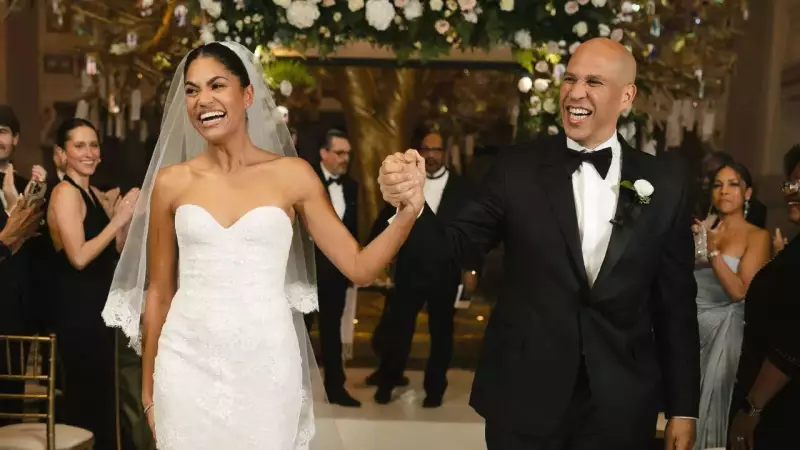
The recent wedding of US Senator Cory Booker to Alexis Lewis was a moment of personal celebration, but it quickly became a catalyst for the internet to resurrect a long-standing narrative: speculation about the politician's sexuality. Despite the wholesome nature of the ceremony, social media platforms were soon flooded with recycled jokes, trending hashtags, and years-old whispers, proving that some rumours have a remarkable shelf life.
The Origins of the Rumour: A Two-Decade Saga
The earliest whispers about Cory Booker being gay emerged in the early 2000s, when he was a rising political star in Newark. His profile—young, unmarried, articulate, and openly discussing themes of love and compassion—stood out in the landscape of American politics. For some, this deviation from a more traditional, stoic masculine persona was enough to fuel speculation about his sexual orientation.
This ambiguity was prolonged by Booker's own principled stance on privacy. For years, he avoided publicly defining his orientation, arguing that a person's sexuality should not be a prerequisite for public trust. While this was a stand against homophobia, the lack of a clear denial provided fertile ground for the rumours to grow.

Why the Speculation Refused to Die
The rumours gained mainstream traction during his successful 2013 Senate campaign, where opponents used innuendo about his mannerisms as a political weapon. Cable news and blogs amplified the narrative, embedding it deeper into public discourse. Three key factors allowed these rumours to persist for over a decade:
Firstly, his prolonged unmarried status became a focal point for conspiracy theories with every election cycle. In US politics, an unmarried man is often viewed with undue suspicion.
Secondly, Booker's comfort with emotional intelligence—publicly sharing vulnerabilities and deep friendships—was misinterpreted by some as a sign of coded queerness, a reflection of rigid American gender norms.
Thirdly, and perhaps most crucially, was Booker's refusal to dignify the gossip. He never performed traditional masculinity to silence critics and rarely scolded people for asking. This strategic silence, while aimed at depriving the rumour of legitimacy, unintentionally gave it oxygen.
The 2025 Wedding and the Internet's Predictable Cycle
Booker's marriage to Alexis Lewis, celebrated in sentimental locations and covered warmly by the press, was logically seen as an event that would finally lay the rumours to rest. Instead, it triggered the internet's well-worn cycle of revival. Old screenshots and memes resurfaced, and even figures like George Santos added chaotic commentary, ensuring the discourse strayed far from reality.
This pattern highlights a modern paradox: when a public figure finally resolves the ambiguity that fuelled years of speculation, the online world often clings to the speculation itself, preferring the familiar narrative to the new facts.
The Simple Truth Amidst the Noise
So, what is the truth behind two decades of whispers? The factual record is straightforward: Cory Booker has stated he is heterosexual, and he has now married a woman, Alexis Lewis. There has never been any credible evidence presented to the contrary.
The persistence of these rumours is not a story about hidden truths but about cultural stereotypes and political convenience. They became a convenient shorthand for critics and a low-effort meme for online speculators, detached from any basis in reality.
The bottom line is that Booker's wedding doesn't "prove" anything because the rumours were never rooted in proof. They were rooted in outdated stereotypes about masculinity, the political utility of smear, and a discomfort with complexity in public figures. The enduring saga of the rumours about Cory Booker reveals far more about societal attitudes towards privacy, masculinity, and power than it does about the man himself. While the marriage may not stop the internet's rumour mill, it serves as a stark reminder of the narratives we choose to perpetuate and why.