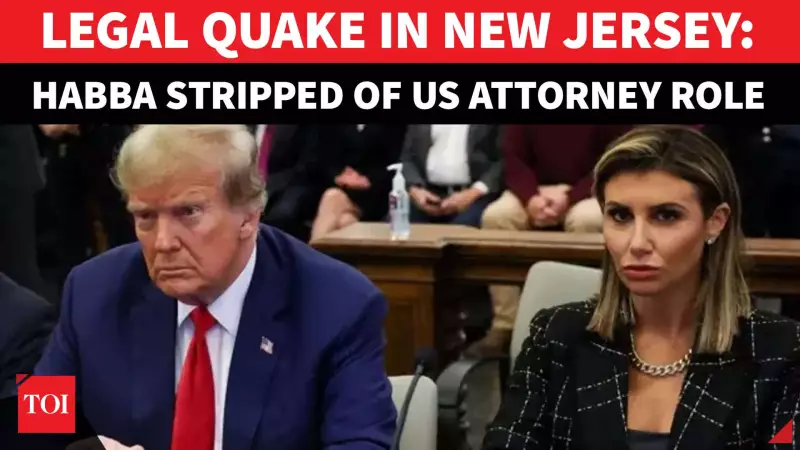
In a significant legal blow to former President Donald Trump's administration, a federal appeals court has upheld a decision that disqualifies Alina Habba from serving as the acting U.S. Attorney for New Jersey. The court, in a strongly worded judgment delivered on December 2, 2025, declared that Habba had been serving in the position "unlawfully and invalidly."
The Core of the Legal Challenge
The controversy began when three individuals facing criminal charges challenged Habba's legal authority to lead the office that was prosecuting them. They argued that her appointment did not comply with established legal procedures. The lower court agreed, and now the appeals court has affirmed that ruling. The judges expressed serious concern, warning that the administration's method of appointing her was so broadly interpreted that it threatened to undermine constitutional safeguards designed to ensure proper appointments to key government posts.
A Setback for Trump's Legal Apparatus
This ruling represents more than just a personnel change; it is a direct rebuke of the Trump administration's approach to filling vacancies. The court focused on the interpretation of the Federal Vacancies Reform Act, a law that dictates how temporary appointments can be made. By finding Habba's appointment unlawful, the court has put a check on executive power, emphasizing that legal technicalities cannot be bypassed. For the Trump legal and political machine, this is a pronounced setback, potentially affecting ongoing cases and the administration's control over key Justice Department positions.

Broader Implications and Reactions
The decision sends a clear message about the limits of presidential appointment powers. Legal experts suggest this could invite further scrutiny of other temporary appointments made by the administration. The sharp language of the court's opinion highlights the judiciary's role in maintaining the balance of power. Meanwhile, the case has ignited discussions about the integrity of judicial processes and the importance of adhering to appointment laws, regardless of the administration in power. The ruling stands as a precedent that could influence similar disputes in the future.
The news of Habba's disqualification has quickly become a focal point in larger political and legal narratives, illustrating the ongoing tensions between different branches of the U.S. government.