The horrific beheading of an Indian-origin motel owner in Texas, which drew a strong response from then-President Donald Trump, has taken a significant legal turn. Prosecutors have decided not to seek the death penalty for the accused, a 37-year-old Cuban national, opting instead for a maximum sentence of life imprisonment without parole.
A Gruesome Crime and Swift Arrest
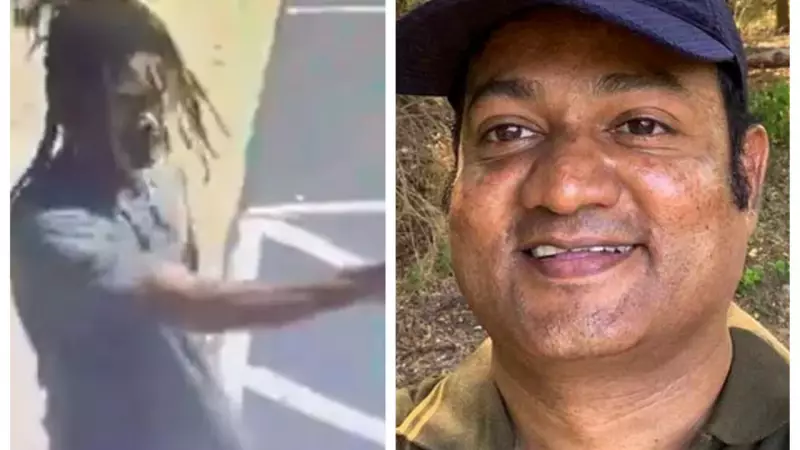
The incident that shocked the community occurred on the morning of September 10. The victim, Chandramouli Nagamallaiah, was the manager of a motel in Texas where the accused, Yordanis Cobos-Martinez, worked. According to reports, an argument erupted after Nagamallaiah instructed Martinez and a female co-worker not to use a broken washing machine, asking the female worker to translate the instruction.
Martinez was reportedly enraged that Nagamallaiah did not speak to him directly. Surveillance footage captured the chilling sequence of events that followed. Cobos-Martinez followed Nagamallaiah out of the room, pulled out a machete, and attacked him. The attack was witnessed by Nagamallaiah's wife and son. In a final act of brutality, Martinez beheaded the victim, kicked the head down the driveway, then picked it up by the hair and tossed it into a dumpster.

Cobos-Martinez was swiftly arrested and taken into custody. He reportedly admitted to the murder during police interrogation. Within a month of the incident, a grand jury indicted him on a capital murder charge.
Prosecution's Surprising Shift on Death Penalty
In a recent development that has raised questions, the prosecution has backed away from seeking capital punishment. Prosecutor Julie Johnson informed the court that the District Attorney Creuzot’s office does not intend to try this as a death penalty case. This decision means life imprisonment without parole is now the maximum punishment possible.
The primary reason cited for this shift is the legal and diplomatic complications arising from the accused's citizenship. Since Yordanis Cobos-Martinez is not a US citizen but a Cuban national, pursuing the death penalty would entail extensive and complex legal proceedings between the United States and Cuba. This bureaucratic and diplomatic hurdle appears to have influenced the prosecution's strategy.
Fallout and Unanswered Questions
The case had initially garnered high-profile attention, with then-President Donald Trump vowing strong action against the murderer. The decision not to pursue the death penalty has left many, particularly the Indian-American community and the victim's family, seeking answers about the pursuit of maximum justice.
The legal process will now move forward with the understanding that a life sentence is the ultimate goal for the prosecution. The case highlights the intricate challenges that arise in the American judicial system when crimes involve foreign nationals, especially from countries with which the US has strained diplomatic relations.