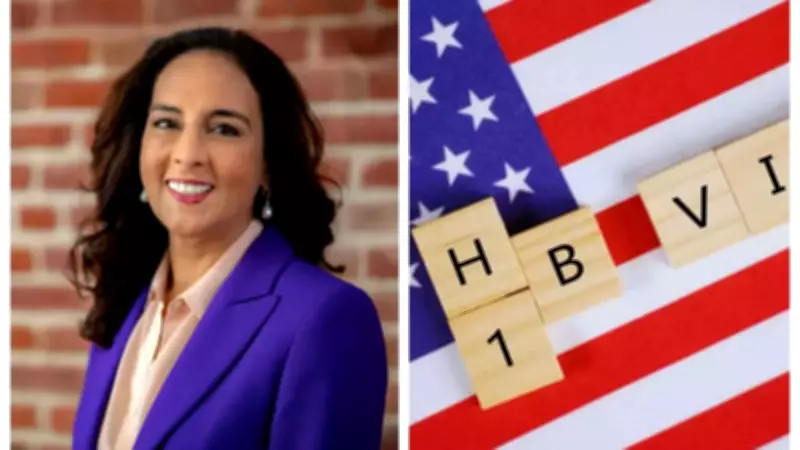
US Justice Department Official Harmeet Dhillon Raises Alarm Over H-1B Visa System
Indian-American lawyer Harmeet K. Dhillon, who serves as the Assistant Attorney General for Civil Rights at the U.S. Department of Justice, has publicly criticized the current H-1B visa program, highlighting systemic issues that she believes disadvantage American workers. In a recent appearance on Christopher Rufo's podcast, Dhillon articulated her concerns amid growing national resistance to the visa system that facilitates the hiring of skilled professionals from countries like India and China.
An Immigrant's Perspective on Visa Exploitation
Dhillon, herself an immigrant who arrived in the United States on a visa, expressed gratitude for the opportunities her family received. However, she pointed out a troubling trend: government-funded institutions are disproportionately hiring individuals on H-1B and other legal immigrant visas, even when qualified Americans are available to fill those positions. "This is problematic," Dhillon stated, emphasizing the need for a balanced approach that prioritizes domestic employment.
Active on social media, Dhillon frequently responds to reports of H-1B abuse, often promising action or seeking additional details to address violations. Her engagement underscores a commitment to enforcing federal laws while advocating for broader societal changes.

Call for Educational and Economic Reforms
Reflecting on her personal background, Dhillon noted that her father, a doctor, provided essential medical services in a rural community—a role she sees as vital given the shortage of graduates from American medical schools. "But why aren't they producing enough doctors?" she questioned, urging a shift in focus. Dhillon argued that foreign professionals should be the exception, not a significant portion of the workforce, and called for solving this through societal and demand-side changes.
She described the issue as a bipartisan concern, affecting both conservative and liberal viewpoints. Drawing from her decades of experience as a lawyer in Silicon Valley, Dhillon explained the economic incentives driving corporations to exploit foreign labor. "It's cheaper, and there's a fiduciary duty to maximize profits by minimizing costs," she said, acknowledging that while the Department of Justice can penalize institutions blatantly violating federal law, the broader puzzle requires solutions beyond its jurisdiction.
The Path Forward: Balancing Immigration and Domestic Needs
Dhillon's comments come at a time of heightened debate over immigration policies and their impact on the American job market. Her insights highlight a complex interplay between legal frameworks, corporate practices, and educational shortcomings. As resistance to the H-1B program grows, her advocacy for reforms aims to foster a system that supports both immigrant contributions and domestic workforce development, ensuring a fair and sustainable economic future.