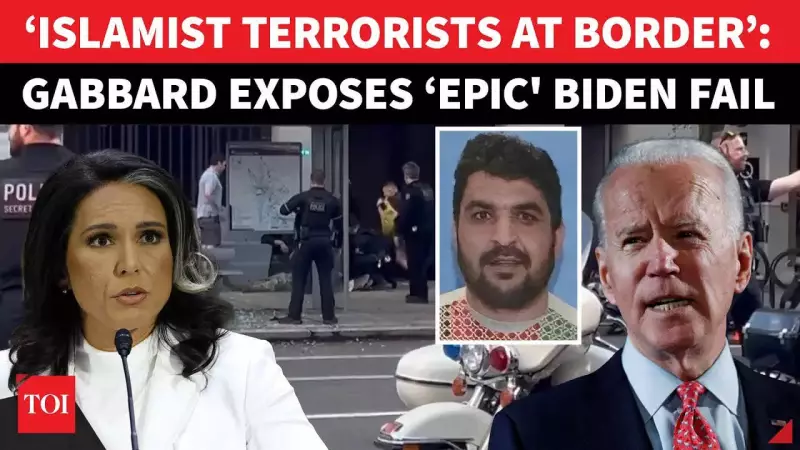
In a stark warning following a recent attack in Washington DC, former Democratic congresswoman and current Director of National Intelligence under the Trump administration, Tulsi Gabbard, has launched a sharp critique against her former party. Gabbard attributed the domestic terror threat to Islamist ideology and directly linked it to what she described as the open border policies of the previous Democratic administration.
Gabbard's Warning on Ideological Roots of Terror
Speaking on December 3, 2025, Gabbard emphasized that the primary danger to homeland security stems from extremist beliefs. She argued that simply addressing the symptoms is insufficient. The core of the threat, according to her assessment, is the Islamist ideological root of the violence. Gabbard stressed that for the nation to be truly secure, this foundational ideology must be confronted and countered directly. Her comments shift the focus from operational tactics to the underlying belief systems that motivate such attacks.
The Border Security Connection
The former Hawaii representative made a direct connection between national security and immigration control. Gabbard claimed that individuals posing a terror threat had been "let in across our borders" during the tenure of the previous government. She described the border as porous and suggested this vulnerability was exploited, allowing dangers to grow within the country. This critique forms part of a broader political debate where border policy is framed as a first line of defense against external threats.

Political Repercussions and Policy Demands
Gabbard's remarks, coming from a high-profile defector from the Democratic Party, carry significant political weight. They amplify the Trump administration's longstanding narrative linking immigration with security risks. By framing the DC attack as a consequence of policy failures, she calls for a fundamental overhaul in approach. The implied solution is a dual strategy: securing physical borders to prevent entry and waging an ideological battle against extremism domestically. This stance is likely to fuel further debate on the balance between national security, civil liberties, and immigration reform.
The incident and Gabbard's response underscore the deeply polarized nature of security discussions. While one side views strong borders as essential for filtering threats, critics often argue such positions can lead to discrimination and overlook homegrown radicalization. Gabbard's position, however, leaves no room for ambiguity, placing the blame squarely on specific policies and ideologies for endangering American safety.