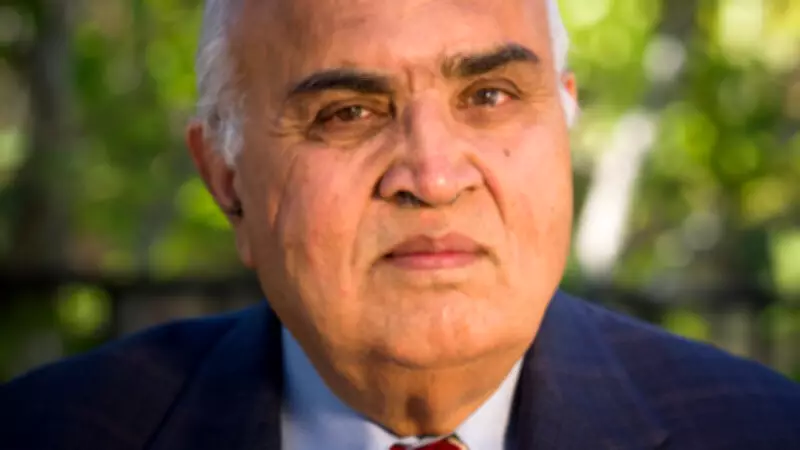
Indian-American business pioneer Kanwal Singh Rekhi, who made history as the first Indian-American to take a company public in Silicon Valley, has voiced significant concerns about the current divisive atmosphere surrounding immigration policies in the United States. The veteran entrepreneur, whose journey from rural India to technological leadership exemplifies the immigrant success story, now observes troubling shifts in political rhetoric that he believes threaten the longstanding partnership between India and America.
Changing Immigration Landscape and Rising Concerns
Rekhi notes that the rhetoric against Indians has been intensifying, with policymakers increasingly accusing Indians of exploiting immigration policies. This hostile environment has made it substantially more difficult for Indians to obtain visas, creating what Rekhi describes as an unwelcoming atmosphere. "The overall messaging is that Indians are not welcome in the US," Rekhi observed, contrasting this with the more receptive environment he experienced when he first arrived in America.
He emphasizes that America's historical invitation to Indian talent was never motivated by generosity alone but rather by practical necessity. During the 1960s, the United States faced a critical shortage of scientists and engineers while competing with the Soviet Union in the space race and technological advancement.

Personal Journey from Rural India to Silicon Valley
"So in 1967, with barely enough money to last a semester, I traveled from rural India to Michigan's Upper Peninsula to pursue a master's degree in engineering," Rekhi recounted in his recent commentary for the San Francisco Chronicle. "When we beat the Soviets to the moon, the fate of India and the US became inextricably linked."
After working in the defense industry, Rekhi founded Excelan, a startup that produced ethernet boards that became foundational to the early internet. This venture made him the first Indian-American to take a company public in Silicon Valley. At its peak, Excelan employed nearly 1,000 people, transforming the lives of employees and their families before the company was eventually acquired.
Transformative Impact of Indian-American Entrepreneurship
Rekhi later transitioned to investing, funding over 100 startups that collectively created tens of thousands of jobs and injected billions of dollars into the American economy. He explains that immigrants possess a unique drive to start businesses because they lack traditional safety nets, making survival through entrepreneurship almost mandatory.
"When I founded my company in the early 1980s, Indian American entrepreneurs were rare," Rekhi noted. "Today, we are everywhere." His observations are supported by remarkable statistics:
- Approximately one quarter of Silicon Valley startups involve Indian Americans as founders, investors, or board members
- Indian Americans have led some of the world's most influential companies including Google, Microsoft, Starbucks, IBM, and Pepsi
- While comprising only about 1.6% of the U.S. population, Indian Americans account for over 10% of the country's CEOs, physicians, and professors
By nearly every metric—education, income, entrepreneurship—Indian Americans represent a compelling case study in what effective immigration policy can produce for a nation, Rekhi emphasized.
Addressing the H-1B Visa Controversy
Commenting on the contentious H-1B visa debate, where critics argue that Indians receive the majority of these non-immigrant work visas and consequently take jobs from Americans, Rekhi acknowledges the statistical reality while providing crucial context.
"It is true that most H-1Bs go to Indians," Rekhi conceded, "but it is also true that American technology leadership is built in collaboration with foreign talent, particularly Indian talent." He highlighted the symbiotic relationship that has developed between front offices in America and back offices in India, benefiting both nations economically and technologically.

Strategic Imperative for US-India Collaboration
Rekhi warned that reversing this productive trend would negatively impact both countries. His concerns come at a pivotal moment as India has recently become the world's fourth-largest economy and is projected to become the third-largest by 2030.
"It's imperative that the world's oldest democracy (America) and the world's largest democracy (India) work together," the investor stressed. "This collaboration is essential not only to maintain technological leadership ahead of China but also to stem the rise of authoritarianism globally."
The veteran businessman's perspective offers a unique vantage point spanning decades of technological evolution and US-India relations. His journey from a student with limited resources to a Silicon Valley pioneer underscores the transformative potential of immigration policies that recognize and nurture talent, regardless of national origin.