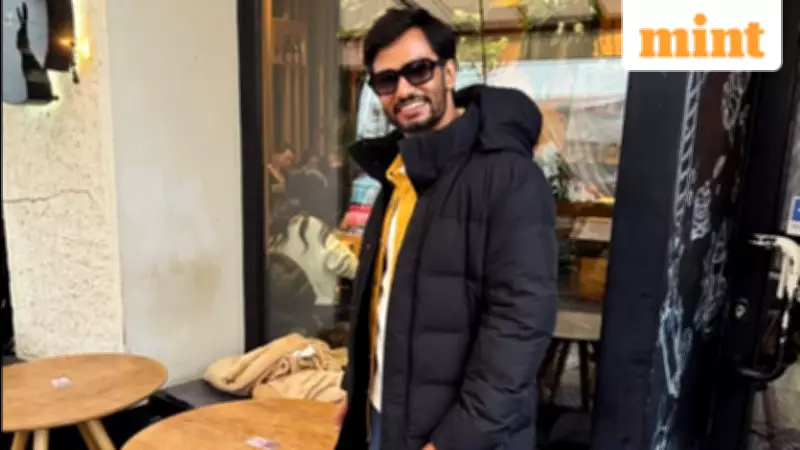
Indian Entrepreneur's US Visa Rejection Despite Strong Documents Leaves Him Baffled
An India-based entrepreneur, Dhananjay Yadav, has expressed profound confusion after his application for a B1/B2 visa was unexpectedly rejected. Yadav, who serves as the co-founder and chief executive officer of NeoSapien—a company renowned for developing a wearable AI device that tracks conversations and analyzes emotions—submitted all relevant documentation but faced denial.
Investor Invitation and Business Purpose
Yadav applied for the US visa in New Delhi after receiving a formal invitation from Hari Valiyath, a close friend and investor in NeoSapien. Valiyath is also a co-founder of Pyxis, a US-based company that has successfully raised over $200 million in funding. The purpose of the trip was to meet Valiyath and explore potential business partnerships, highlighting a legitimate business intent under the B1 visa category.
"I had an invite from a close friend and investor in NeoSapien, Hari Valiyath, to meet him and potential partners. Pyxis has raised over $200 million, and is US-based," Yadav explained in an interview.

Comprehensive Documentation Submitted
To support his application, Yadav provided a thorough set of documents, including:
- Detailed bank statements
- GST filings for his company
- IT filings both for the company and personally
- An invitation letter from Valiyath
He emphasized that his corporate account held sufficient funds due to recent fundraising and exponential sales growth, which should have demonstrated strong financial ties to India.
The Puzzling 10-Minute Interview
Yadav described the visa interview as a brief yet bewildering experience. When asked about his salary, he mentioned that the trip was company-funded, which seemed to agitate the visa officer.
"What's your salary? I mentioned that the trip is covered by my company. For some reason, he got agitated and said, 'Respond to the question that I ask.' I then mentioned my salary, which in my case is minimal as I am a founder," Yadav recounted.
Despite clarifying his educational background—having studied at Virginia Commonwealth University in the US—and his prior work experience in Berlin, the officer proceeded to reject his application.
Past History and Perceived Intent
Yadav pointed out that his history of studying in the US and working abroad should have clearly indicated his lack of intent to overstay. "I am still baffled, and believe that it depends on the whims of the Visa Officer. Knowing my past history of studying in the US, and working in Berlin, it must have been clear that I am not going to stay back," he noted.
Understanding the B1/B2 Visa
The B1 visa is designed for short business trips, including conferences, meetings, and contract negotiations, while the B2 visa caters to tourism, vacations, and visiting friends or family. Typically issued together, the B1/B2 visa allows holders to engage in both business and leisure activities. However, it is crucial to note that these visas do not permit traditional employment in the US.
Visa Privilege and Rejection Grounds
The US Department of State explicitly states that a visa is a privilege, not a right. Applications can be refused or canceled if officers suspect dishonesty, unreliability, or insufficient ties to the applicant's home country. Even minor discrepancies or perceived lapses in documentation can lead to rejection under this clause.
This incident underscores the unpredictable nature of visa processes and raises questions about consistency in evaluations, particularly for entrepreneurs with solid credentials and clear business objectives.