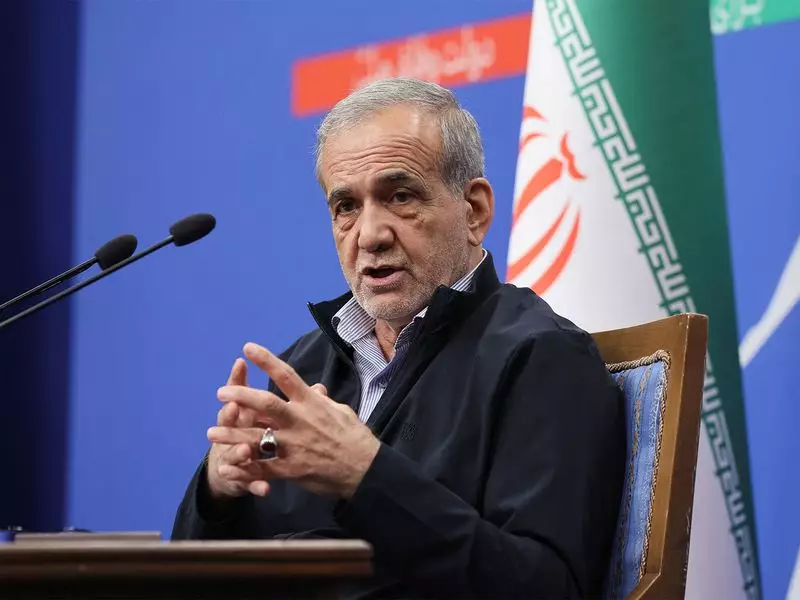
Iran's newly elected President, Masoud Pezeshkian, has launched a sharp accusation against the United States and Israel, claiming the two nations are actively attempting to destabilize his country by fomenting internal disorder. The President's statement directly links foreign powers to the orchestration of riots within Iran, aiming to create a state of chaos.
Allegations of Foreign-Instigated Unrest
In a strong declaration, President Pezeshkian asserted that the directives for creating turmoil in Iran are issued from outside its borders. He specifically named the United States and the Zionist regime (Israel) as the primary actors behind this campaign. The President's comments suggest a belief that recent or potential civil unrest is not organic but is rather a tool of foreign policy used by adversaries to weaken the Islamic Republic.
Pezeshkian framed this alleged interference as a direct attack on Iran's sovereignty and internal security. He emphasized that the ultimate goal of these actions is to plunge the nation into disarray, undermining its stability from within. This rhetoric aligns with long-standing positions within the Iranian leadership, which often attributes domestic dissent to the machinations of foreign enemies, particularly the US and Israel.

A Vow of Resistance and National Unity
The Iranian President did not stop at making accusations. He coupled his claims with a firm pledge of resistance. Pezeshkian vowed that Iran will "not allow the sowing of chaos and disorder" within its territory. He positioned his administration as a bulwark against these external pressures, committed to protecting the nation's integrity and social order.
This stance serves multiple purposes. Internally, it seeks to rally nationalistic sentiment and present the government as the defender of the homeland against foreign aggression. It also sends a clear message to the international community, particularly Washington and Tel Aviv, that Tehran views such tactics as unacceptable and will actively counter them. The President's language indicates a continuation of the confrontational foreign policy posture characteristic of Iran's establishment.
Context and Regional Implications
These allegations come at a time of heightened regional tensions and ongoing geopolitical rivalry. The relationship between Iran and the US-Israel axis has been fraught for decades, marked by issues ranging from Iran's nuclear program to its regional influence in countries like Syria, Lebanon, and Yemen. Accusations of meddling in internal affairs are frequently exchanged between the sides.
By publicly stating that the US and Israel "want to sow chaos and disorder," President Pezeshkian is reinforcing a narrative that justifies internal crackdowns on dissent by framing it as countering foreign subversion. It also diverts attention from domestic economic or political challenges by redirecting public frustration toward external adversaries. This strategy is a common feature in the playbook of governments facing internal pressure.
The President's statement is likely to further strain diplomatic relations and reduce the already slim prospects for near-term de-escalation or dialogue on other contentious issues. It underscores the deep-seated mistrust that defines these relationships and suggests that Pezeshkian, despite being viewed by some as a moderate, adheres to the core foreign policy principles of the Iranian state regarding its primary adversaries.
In conclusion, President Masoud Pezeshkian's direct accusation against the United States and Israel reveals the lens through which Tehran views internal unrest. The framing of riots as foreign-ordered operations to create chaos is a powerful political tool used to consolidate domestic control and justify a hardline stance against international foes. As Iran continues to navigate complex internal and external landscapes, such rhetoric ensures that the shadow of geopolitical conflict remains a central feature of its political discourse.