Iran Escalates Gulf Conflict with Direct Strikes on US Forces in Kuwait
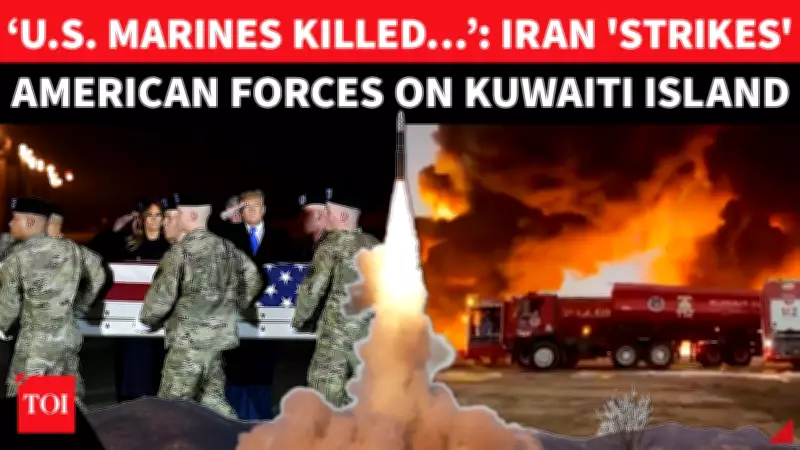
In a dramatic and dangerous escalation of hostilities in the Persian Gulf, Iran's Islamic Revolutionary Guard Corps (IRGC) has claimed responsibility for launching coordinated drone and missile strikes against United States military forces stationed in Kuwait. The attacks, which reportedly targeted American personnel and assets, have allegedly resulted in casualties, although official confirmation from Washington remains pending at this critical juncture.
IRGC Issues Stark Warning of American Expulsion from Region
Tehran has followed these aggressive military actions with a stark and unambiguous warning, threatening the complete removal of American troops from the entire Gulf region. This declaration signals a significant hardening of Iran's position and poses a direct challenge to US strategic interests and military presence in the Middle East.
The precision strikes focused on key logistical and strategic locations within Kuwait, including the vital Shuwaikh Port and the Mubarak al-Kabeer Port. These facilities are crucial hubs for regional trade and military operations, and their targeting indicates a calculated effort by Iran to disrupt supply lines and demonstrate its capability to strike at will.

Rapid Expansion of Conflict Stokes Fears of Wider Regional War
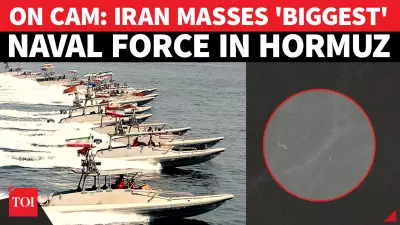
This latest offensive is not an isolated incident but part of a rapidly expanding pattern of aggression. Iran and its allied proxies have executed repeated strikes across multiple Gulf nations in recent weeks, creating a cascade of violence that is pushing the already volatile region toward the brink of a much broader and far more dangerous conflict.
Growing international alarm is palpable, with fears mounting at the United Nations and among global diplomatic circles. The situation is deteriorating at an alarming pace, with each new attack increasing the risk of a full-scale regional war that could draw in major world powers and have devastating humanitarian and economic consequences.
Context of Escalating Strikes and Political Rhetoric
The attack on US forces in Kuwait occurs against a backdrop of intensifying military actions and heated political rhetoric. Recent reports have detailed a series of provocative incidents, including:
- Missile and drone attacks on Abu Dhabi that injured half a dozen people and ignited multiple fires in the UAE capital.
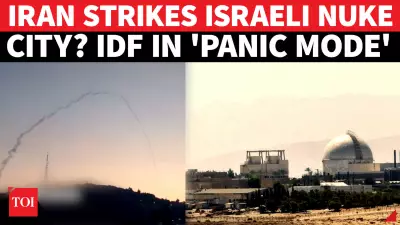
- Houthi forces, aligned with Iran, joining the conflict by firing a missile at a suspected Israeli nuclear site.
- Direct Iranian strikes on Saudi Arabia's Prince Sultan Air Base, resulting in injuries to US soldiers and damage to refueling and AWACS aircraft.
- A deadly cluster bomb barrage on Tel Aviv, causing significant explosions, damage, and widespread panic.
Furthermore, the US has confirmed that approximately 300 American soldiers have been injured in Iranian attacks across the Middle East since the current phase of hostilities began. The IRGC has explicitly threatened to expand the war zone further, targeting US infrastructure in retaliation for Israeli bombings of Iranian nuclear sites.
Political Fallout and Strategic Calculations
The crisis has ignited fierce political debate within the United States. Former President Donald Trump has commented on the situation, suggesting Iran is "begging" for a deal as strikes intensify. Meanwhile, Senator Marco Rubio has claimed the Iran war is nearing its conclusion, but warns it may end without an immediate ground invasion, implying other decisive actions.
Conversely, US Senator Peter Welch has lambasted the Trump administration's approach, criticizing a proposed $200 billion push for the Iran war as lacking a coherent strategy, while asserting that "Tehran is still strong." Domestic political tensions are also flaring, as evidenced by House Speaker Mike Johnson's furious reaction to Senate funding maneuvers, which he labeled a "joke," upending a potential shutdown deal.

This complex web of military aggression, geopolitical maneuvering, and domestic political strife underscores the extreme volatility of the current moment. The direct Iranian strikes on US forces in Kuwait represent a perilous new chapter, one that demands urgent international diplomacy to prevent a catastrophic regional war with global implications.