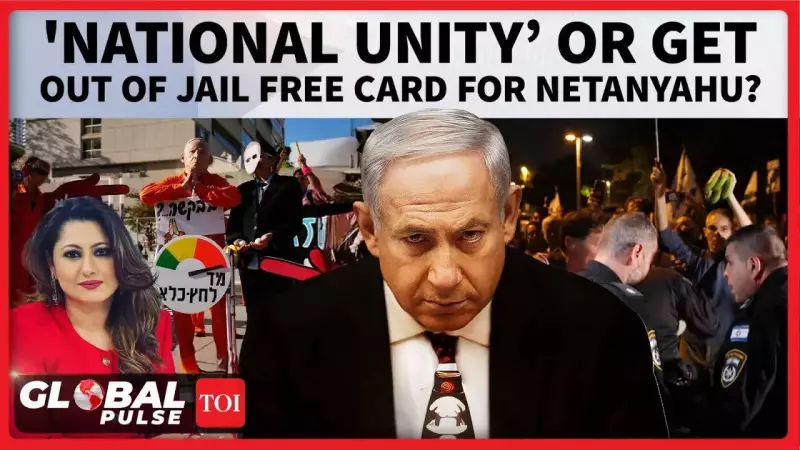
Israeli Prime Minister Benjamin Netanyahu has formally approached the country's President with a request for a presidential pardon. This move aims to absolve him of long-running corruption charges that have cast a shadow over Israeli politics for several years.
A Request Framed as National Healing
Netanyahu submitted his formal plea for clemency on December 2, 2025. He positioned this controversial step as a necessary measure to foster "national unity". The Prime Minister argued that closing the protracted legal chapter is crucial for Israel's stability, especially during a time of significant regional and domestic transitions.
Immediate Backlash and Democratic Concerns
The request, however, triggered an immediate and fierce backlash from political opponents, legal experts, and large sections of the public. Critics are united in their condemnation, asserting that granting a pardon would severely undermine democratic norms and erode public trust in the judicial system.

They warn that such an action would set a dangerous precedent, suggesting that powerful leaders can operate above the law and evade accountability through political means. This debate has poured fuel on the already intense political divisions within Israel, reigniting deep-seated tensions and polarizing the national discourse further.
The Core of the Controversy
At the heart of the storm is the fundamental conflict between a leader's appeal for political closure and the principle of equality before the law. Netanyahu's supporters may view the pardon as a path to end a divisive saga. Conversely, his detractors see it as the ultimate subversion of justice, where legal processes are shortcut for political convenience.
The outcome of this pardon request is now poised to become a defining moment for Israeli democracy. It tests the resilience of its institutions and the public's faith in the rule of law, with potential ramifications that will be studied and debated for years to come.