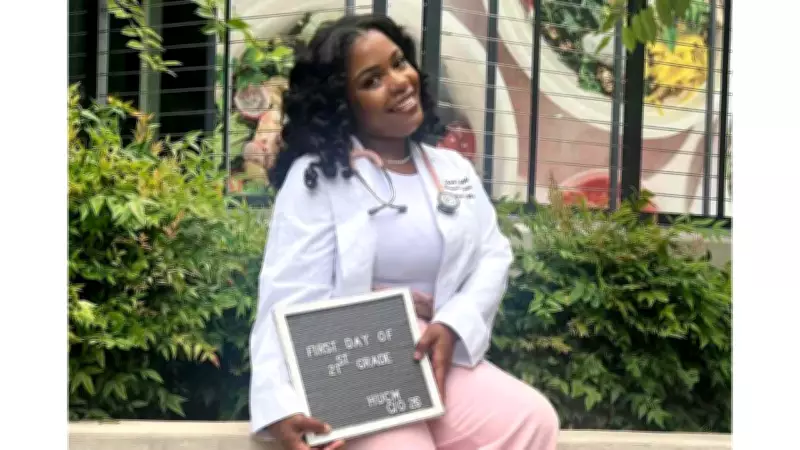
From Hospital Janitor to Doctor: Shay Taylor-Allen's Inspiring Medical Journey
For nearly a decade, Shay Taylor-Allen moved quietly through the corridors of Yale New Haven Hospital, performing the essential but often overlooked work of cleaning patient rooms and preparing spaces for medical care. Few would have imagined that this dedicated hospital employee was simultaneously working toward a future on the other side of the healthcare system.
Balancing Night Shifts with Academic Dreams
Taylor-Allen's journey into medicine did not follow the conventional route. After graduating among the top students in her high school, she earned her undergraduate degree from Southern Connecticut State University. Like many aspiring doctors who discover their calling later in life, she needed to build a strong academic foundation in the sciences.
What sets her story apart is how she funded and pursued her education. While working as a janitor at Yale New Haven Hospital, Taylor-Allen reportedly financed parts of her journey herself. Her night shifts became more than just a job—they became the financial backbone supporting her medical aspirations.

The Academic Pathway to Medical School
Taylor-Allen went on to complete a post-baccalaureate and master's-level program at Quinnipiac University, a crucial step that helped bridge the gap between ambition and eligibility for medical school. These rigorous programs are specifically designed to prepare students for the intensity of medical education, demanding both significant time and financial commitment.
Preparing for the Medical College Admission Test (MCAT), she faced setbacks including the need to retake the exam. Her eventual score, around the 73rd percentile, reflected her improvement and persistence. For many medical school applicants, the MCAT represents a defining hurdle, but Taylor-Allen's experience underscores a broader reality: success in medicine is rarely linear, and determination often matters as much as initial performance.
From Howard University to Residency Match
Her acceptance into Howard University College of Medicine marked a significant turning point. Known for its legacy of training physicians who serve diverse and underserved communities, the institution provided both opportunity and challenge.
After completing her medical degree, Taylor-Allen entered the highly competitive residency match process. She successfully matched into anesthesiology at Yale New Haven Hospital—the very institution where she once worked behind the scenes. In the United States, residency placements are determined through a national matching system that evaluates candidates holistically, considering academic performance, clinical experience, interviews, and recommendations.
A Story That Sparked National Conversation
As her journey gained attention online, it resonated widely, drawing praise for its powerful message of perseverance and upward mobility. Many viewed her story as an inspiring example of what can be achieved through sustained effort, particularly for those navigating financial and structural barriers in healthcare education.
At the same time, her success became part of broader conversations around diversity, equity, and inclusion in medical education. Some critics questioned whether such policies played a role in her trajectory, especially amid ongoing debates in the United States about admissions practices. However, there is no publicly verified evidence to suggest that her achievements resulted from preferential treatment, as medical school admissions and residency matches are complex, multi-factor processes where individual outcomes are not determined by any single score or criterion.
The Meaning of a Full-Circle Moment
Beyond the debates, Taylor-Allen's story stands as a powerful reminder of the human side of medicine. Her journey—from cleaning hospital rooms to preparing to treat patients as a physician—captures a rare continuity within a single institution. This represents not just a transformation of profession, but a profound shift in perspective.

Returning to Yale New Haven Hospital as a doctor in training, she brings with her an intimate understanding of the hospital ecosystem that few physicians possess. Her path reflects both the challenges and possibilities within modern medical education, offering a narrative that is as much about resilience and determination as it is about reaching the final destination.
Taylor-Allen's story embodies persistence, sacrifice, and an unyielding belief in possibility—qualities that will undoubtedly serve her well as she continues her medical career at the very hospital where her journey began.