US Lawmaker Ro Khanna Names Six Wealthy Men Hidden in Epstein Files, Sparks DOJ Cover-Up Claims
A significant political controversy has erupted in Washington after Indian-origin US Democrat Representative Ro Khanna publicly identified six "wealthy and powerful" men whose names he claims were improperly redacted from the Jeffrey Epstein files. Khanna, representing California, accused the US Justice Department of concealing these identities without any valid explanation, raising serious questions about transparency and accountability in one of the most high-profile cases involving elite global figures.
Khanna's Congressional Revelation and Constitutional Protection
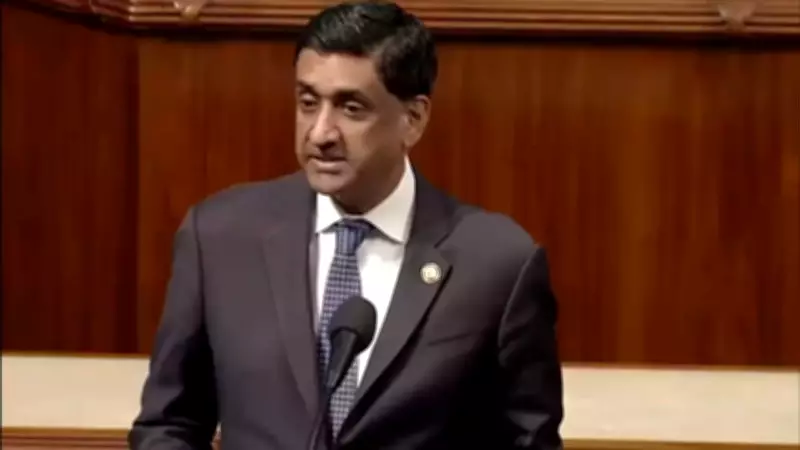
During a speech on the floor of the House of Representatives, Khanna read out the names of the six individuals: billionaire businessman Les Wexner, Dubai-based real estate developer Sultan Ahmed bin Sulayem, and four others—Salvatore Nuara, Zurab Mikeladze, Leonic Leonov, and Nicola Caputo. This action was strategically protected under the US Constitution's speech and debate clause, which shields lawmakers from defamation lawsuits for remarks made in Congress. A video clip of Khanna's speech quickly went viral on social media platforms, amplifying the reach and impact of his allegations.
In a related social media post, Khanna stated, "Rep. Thomas Massie and I forced last night the DOJ to disclose the identities of 6 men: Salvatore Nuara, Zurab Mikeladze, Leonic Leonov, Nicola Caputo, Sultan Ahmed Bin Sulayem, and billionaire businessman Leslie Wexner." He emphasized that this disclosure was just the beginning, hinting at deeper investigations to hold accountable those involved in the Epstein scandal.

Joint Investigation with Rep. Thomas Massie and the Jeffrey Epstein Transparency Act
Khanna collaborated with Republican Representative Thomas Massie from Kentucky in this effort. The two lawmakers spent approximately two hours at the Justice Department in Washington, reviewing unredacted versions of the Epstein documents. They are co-sponsors of the Jeffrey Epstein Transparency Act, a legislative measure that compelled the previous Trump administration to release a vast collection of records related to Epstein's extensive network and illicit activities.
Khanna asserted, "There were six wealthy, powerful men that the DOJ hid for no apparent reason," claiming that he and Massie had effectively "forced" the department to unredact these names. He provocatively added, "If we found six men they were hiding in two hours, imagine how many men they are covering up for in those files." Massie echoed this sentiment, stating he was prepared to publicly name the individuals in Congress if the Justice Department failed to act, noting that their inclusion in the files likely implicated them in wrongdoing.
Profiles of the Named Individuals and Their Epstein Connections
The six men named by Khanna have varying degrees of association with Jeffrey Epstein, a convicted sex offender who died by suicide in 2019 while awaiting trial on federal sex trafficking charges.

- Les Wexner: The billionaire founder of Victoria's Secret and former head of L Brands, Wexner has a long and controversial history with Epstein. A 2019 New York Times investigation detailed their financial ties and Epstein's significant influence over Wexner's personal and business affairs.
- Sultan Ahmed bin Sulayem: A Dubai-based billionaire businessman and real estate developer, he is the brother of Mohammed Ben Sulayem, president of the FIA, the global governing body for motorsport. Previous reports have highlighted email exchanges between Bin Sulayem and Epstein.
- Salvatore Nuara, Zurab Mikeladze, Leonic Leonov, and Nicola Caputo: While less publicly known, these individuals were identified as part of the group whose names were redacted, suggesting potential links to Epstein's network that warrant further scrutiny.
Justice Department's Response and Denial of Cover-Up
In response to Khanna's allegations, Deputy Attorney General Todd Blanche firmly denied any cover-up by the Justice Department. He maintained that certain redactions were necessary to protect the identities and privacy of victims involved in the Epstein case. Blanche argued that Wexner's name, for instance, appears thousands of times elsewhere in the publicly available files, asserting that the department had been "hiding nothing" and was committed to lawful transparency.
Widening Political Storm and Broader Implications
The controversy has rapidly expanded beyond the six names disclosed by Khanna, reigniting debates over accountability and justice in the Epstein scandal. Democrats have pointed out that roughly three million pages of documents remain unreleased, despite the Justice Department declaring its review complete after publishing a large batch in January. Several lawmakers who reviewed the files this week complained of "mysterious" and "unnecessary" redactions that go beyond those permitted to protect victims.
House Judiciary ranking member Jamie Raskin reported observing "tons of completely unnecessary redactions," while also expressing concerns that some victims' names had not been adequately shielded, potentially exposing them to further harm.
In a related development, US Commerce Secretary Howard Lutnick is facing bipartisan calls to resign after newly surfaced correspondence revealed he arranged travel to Epstein's private Caribbean island in 2012. Lutnick admitted before a Senate panel that he had lunch with Epstein there, contradicting his previous statement that he had spent "zero time" with the disgraced financier.
Meanwhile, Senate Minority Leader Chuck Schumer, standing alongside a group of Epstein survivors, announced new legislation aimed at eliminating the statute of limitations for certain sexual offenses. The proposed law is named in honor of Virginia Giuffre, one of Epstein's most prominent accusers, who died by suicide in April 2025. Schumer declared, "Justice should not expire. For years, survivors were told it was too late."
Ghislaine Maxwell, Epstein's convicted associate serving a 20-year sentence for sex trafficking, declined to testify before a House oversight committee, invoking her right against self-incrimination. As lawmakers continue to review documents throughout the week, pressure is mounting on the Justice Department for full disclosure, with demands growing louder in what remains one of the most explosive scandals implicating powerful figures worldwide.