London Primary School's Tilak-Chandlo Ban Sparks Religious Rights Controversy
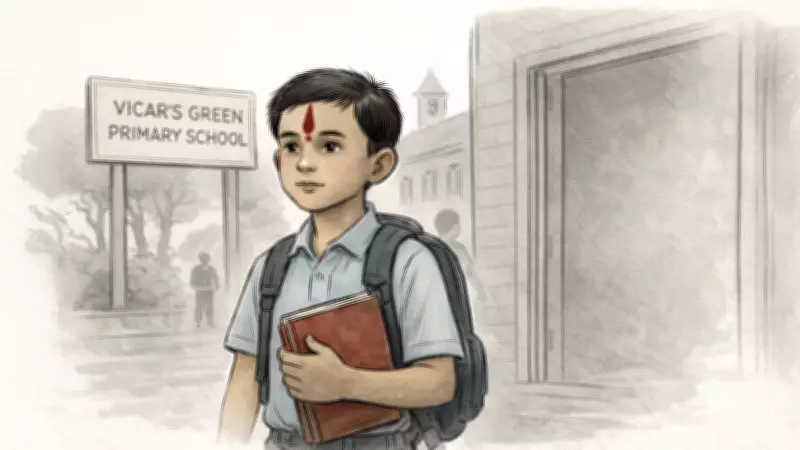
An eight-year-old Hindu student was withdrawn from Vicar's Green Primary School in London by his parents in January 2026 after the school administration disallowed him from attending classes with the traditional 'tilak-chandlo' marking on his forehead. This incident has ignited a significant controversy in the United Kingdom, raising critical questions about religious accommodation, institutional policies, and the application of equality laws within educational settings.
The Incident and Immediate Fallout
The controversy centers on the school's decision to prohibit the young student from wearing the 'tilak-chandlo,' a sacred Hindu marking that combines a vertical tilak (often made from sandalwood paste or kumkum) and a horizontal chandlo (a crescent-shaped mark). For many Hindu families, this is a daily religious practice symbolizing devotion and spiritual protection. The parents, faced with the school's refusal to accommodate this practice, made the difficult decision to withdraw their child from the institution in January 2026, citing a violation of their religious freedoms.
Broader Implications for Religious Accommodation
This case has rapidly evolved into a broader debate about how schools in multicultural societies like the UK balance uniform policies with religious expression. Supporters of the family argue that the ban represents a failure to uphold the principles of religious freedom and equality enshrined in UK law, particularly the Equality Act 2010, which protects individuals from discrimination based on religion or belief. They contend that reasonable accommodations should be made for sincere religious practices that do not disrupt the educational environment.

School Policies and Legal Frameworks
On the other side, school authorities and some policy analysts point to the importance of maintaining consistent uniform rules to promote equality and minimize distractions. They reference existing school policies that may restrict visible religious symbols or markings, arguing that such rules are applied neutrally. However, legal experts note that UK courts have historically required schools to demonstrate that any restriction on religious expression is proportionate and necessary, not merely a matter of convenience or tradition.
Growing Public and Community Reaction
The incident has garnered attention from Hindu community organizations, human rights advocates, and educational policymakers. Many are calling for a review of school uniform policies to ensure they are inclusive and respect cultural diversity. The case also highlights the challenges faced by diaspora communities in preserving their religious identities within foreign institutional frameworks.
As the discussion continues, this event underscores the ongoing tension between institutional authority and individual religious rights, setting a potential precedent for how similar cases might be handled in the future across the UK's educational landscape.