

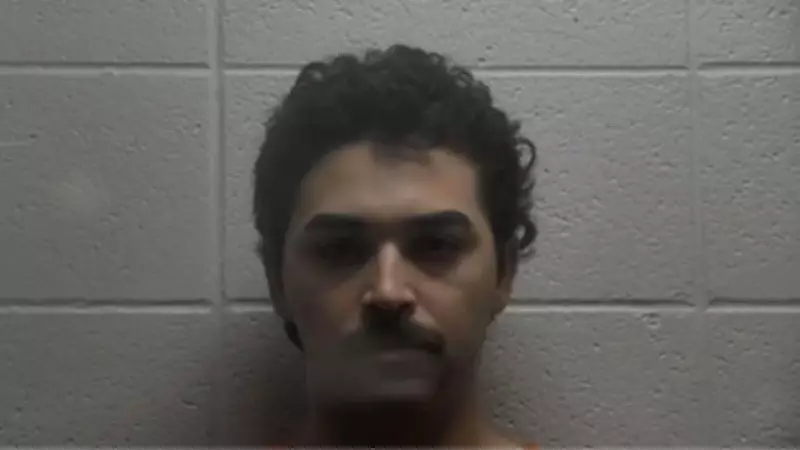
Kentucky Man Faces Federal Charges for Violent Online Threats Against Trump and Police
A 23-year-old man from Lexington, Kentucky has been taken into custody by federal authorities after allegedly posting a disturbing series of graphic online threats targeting former United States President Donald Trump and multiple law enforcement officers. The case has drawn significant attention due to the explicit nature of the threats and the discovery of weapons during the investigation.
Federal Complaint Details Explicit Threats
Federal prosecutors have charged Kadrioan Serainity Santiago with interstate threatening communication following the unsealing of a criminal complaint in U.S. District Court. The charges stem from a string of alleged Instagram posts made between January and late March 2026 under the username "kadi_skating."
According to investigators, the messages contained extremely violent and specific threats. One particularly graphic post allegedly stated that Santiago would cut Trump's face with a razor blade, remove his skin, and feed it to stray dogs. The complaint further details additional threats against law enforcement, including a declaration that he would kill the next officer he encountered, encouragement for others to shoot at immigration agents, and personal threats to kill ICE officers.

The complaint notes that the threatening posts began in January, with one message reading, "im filled with political violence," indicating a concerning mindset behind the communications.
Weapons and Tactical Gear Discovered
The Federal Bureau of Investigation received information about the threatening account on April 1 and launched an immediate investigation. During the course of their inquiry, deputies discovered multiple weapons and tactical equipment inside Santiago's vehicle.
The arsenal included:
- A handgun
- An AR-15-style rifle
- Another long gun
- Multiple magazines
- A Kevlar helmet
- Gas masks
- Various survival equipment
Santiago was initially charged with unlawful possession of a weapon on school property, though that charge was subsequently amended as the federal investigation progressed.
Federal Officials Issue Strong Statements
Jason Parman, First Assistant United States Attorney for the Eastern District of Kentucky, emphasized the seriousness of the charges in a public statement. "Threatening violence against the President and federal law enforcement officers strike at the core of our nation's safety and the rule of law," Parman declared. "These actions will not be tolerated and will be met with swift and decisive prosecution. Through the FBI's diligence and swift action, we moved quickly to address this threat and will pursue prosecution to the fullest extent of the law."
Olivia Olson, an FBI Special Agent involved in the case, issued a stern warning about the consequences of making online threats. "To those who choose to hide behind the anonymity of a screen to unleash threats against the President of the United States, other government officials, and law enforcement, the FBI will find you," she stated firmly. "It is against the law to post threatening communications online, and the FBI and our partners will use every available resource to identify, locate, and arrest those who choose to do so."
Broader Implications for Online Security
This case highlights the increasing concern among federal authorities about violent threats made through social media platforms. The combination of explicit online communications and the discovery of weapons raises significant security questions about how such threats are monitored and addressed by law enforcement agencies.
The swift response by the FBI demonstrates the priority given to threats against high-profile government figures and law enforcement personnel. As social media continues to evolve as a platform for communication, cases like this underscore the legal boundaries that exist regarding online speech and the serious consequences for crossing into threatening territory.

Federal prosecutors have indicated they will pursue the case vigorously, with Santiago facing potentially severe penalties if convicted of the interstate threatening communication charges. The investigation remains ongoing as authorities continue to examine the full scope of the alleged threats and the circumstances surrounding them.
