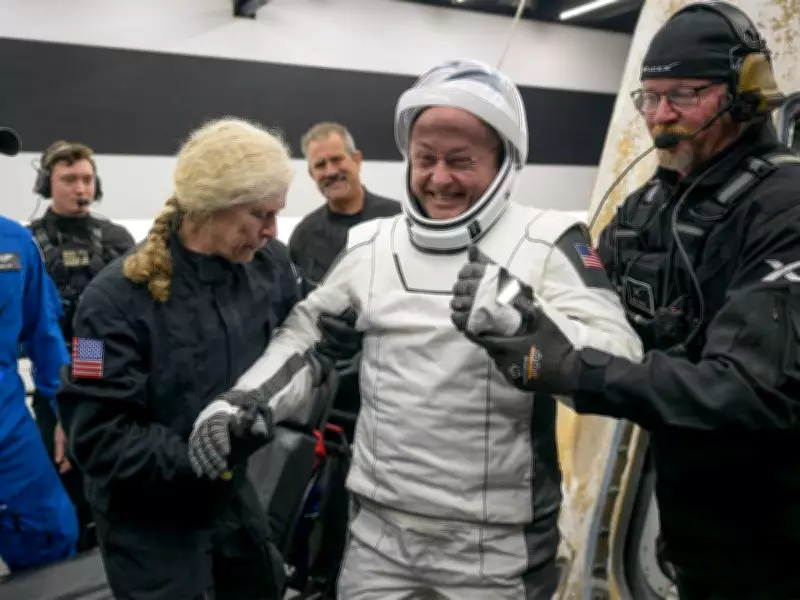
NASA Astronaut's Medical Issue Triggers Early SpaceX Crew-11 Return from ISS
In a significant development for space exploration, NASA astronaut Mike Fincke's medical issue has prompted the early return of the SpaceX Crew-11 mission from the International Space Station (ISS). This unexpected turn of events has led to adjustments in the mission schedule, highlighting the critical importance of astronaut health and safety protocols in space missions.
Details of the Medical Concern and Mission Impact
The medical issue involving Mike Fincke, a seasoned NASA astronaut with extensive experience in space missions, arose during the Crew-11 mission's stay aboard the ISS. While specific details of the medical condition have not been publicly disclosed to respect privacy, NASA officials confirmed that it necessitated an expedited return to Earth. This decision was made in consultation with medical experts and mission control to ensure Fincke's well-being, underscoring the agency's commitment to prioritizing astronaut health over mission timelines.
The early return has resulted in a shortened duration for the Crew-11 mission, which was originally planned for a longer stay on the ISS. This adjustment affects various scientific experiments and maintenance tasks scheduled for the crew, potentially delaying some research initiatives. However, NASA has emphasized that contingency plans are in place to manage such situations, with other crew members and ground teams stepping in to mitigate impacts on ISS operations.

Response from NASA and SpaceX
NASA and SpaceX have collaborated closely to facilitate the safe and swift return of Crew-11. In statements, both organizations expressed their focus on astronaut safety, with NASA highlighting its robust medical support systems and SpaceX ensuring the readiness of its Crew Dragon spacecraft for the early departure. The return journey involved careful coordination with mission control to monitor Fincke's condition and provide necessary medical assistance during re-entry and landing.
This incident brings attention to the challenges of long-duration spaceflight, where medical emergencies can arise unexpectedly. It also showcases the resilience of international space partnerships, as agencies like NASA work with commercial partners like SpaceX to adapt to dynamic situations. The early return serves as a reminder of the inherent risks in space exploration and the continuous efforts to enhance safety measures for astronauts.
Broader Implications for Future Space Missions
The early return of Crew-11 due to a medical issue may influence future mission planning and astronaut selection criteria. NASA is likely to review health monitoring protocols and emergency response strategies to better handle similar scenarios in upcoming missions, including those to the Moon and Mars. This event underscores the need for advanced medical facilities in space and on Earth to support astronaut care.
As space agencies and private companies expand their activities in low-Earth orbit and beyond, incidents like this highlight the importance of flexibility and preparedness in mission operations. The successful management of Fincke's medical issue demonstrates progress in space medicine, but it also points to areas for further improvement to ensure the safety of crews on extended missions.