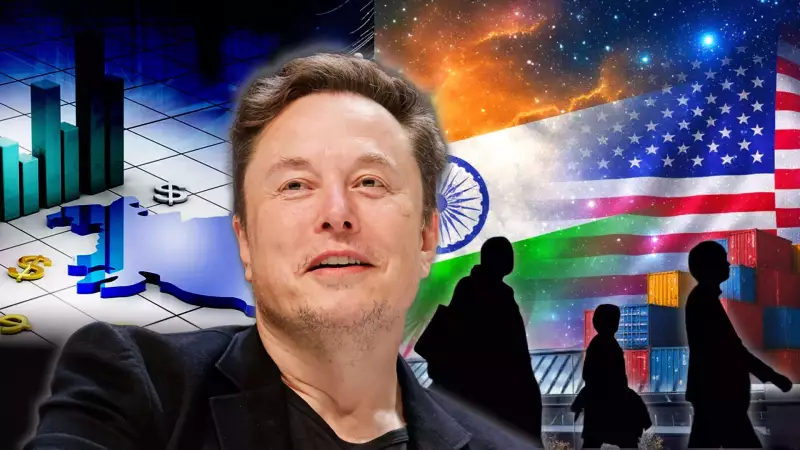
Tesla and SpaceX CEO Elon Musk has delivered a powerful endorsement of Indian professionals and a stark warning to the United States, arguing that America's tech supremacy was built on their talent. His comments, made on a podcast hosted by Indian entrepreneur Nikhil Kamath, have reignited the heated debate on US immigration policy.
Musk's Stark Warning: H-1B Restrictions Will Cripple US Competitiveness
In a conversation that aired on December 1, 2025, Musk dismissed claims that foreign workers displace American jobs. Instead, he highlighted a critical shortage of top-tier engineering talent within the US. "I've always struggled to find enough talented people," Musk stated, emphasizing that American tech giants, AI companies, and innovation hubs grew primarily due to this influx of skilled professionals.
He issued a direct caution against moves to scrap or restrict the H-1B visa program, a key pathway for Indian tech workers. According to Musk, such actions would severely damage the United States' competitive edge on the global stage. His intervention comes at a sensitive time, with Indian H-1B visa approvals seeing a significant plunge and anti-immigration sentiment rising in some political quarters.

Praise for India and Glimpse into the Future: Starlink & AI
Beyond the immigration debate, Musk's discussion covered broader technological horizons. He provided insights into Starlink's expansion plans for India, signaling the satellite internet service's commitment to the growing Indian digital market.
Looking further ahead, Musk shared his vision for the future of work in the age of artificial intelligence. He predicted that AI advancements could make traditional jobs optional within two decades, fundamentally reshaping the global economy and workforce dynamics.
Reopening a Critical Debate for America
Elon Musk's forceful praise for Indian contributions and his criticism of potential policy shifts pose a provocative question to the American establishment. He has effectively reopened the debate on whether the US, by tightening immigration, risks pushing away the very talent pool that fueled its decades-long dominance in technology and innovation.
His comments underscore a central tension in US policy: balancing domestic employment concerns with the need to attract the world's best minds to maintain leadership in cutting-edge sectors like artificial intelligence, space technology, and semiconductor manufacturing.