

NASA's Groundbreaking Discovery: Young Stars' X-Ray Emissions Diminish Rapidly
In a significant astronomical breakthrough, researchers at NASA have uncovered that young stars experience a much faster decline in their X-ray emissions than scientists previously anticipated. This revelation challenges long-held assumptions about stellar behavior and could fundamentally alter our comprehension of how stars evolve over time.
The Conventional Understanding of Young Stellar X-Ray Activity
For decades, astronomers have operated under the premise that young stars maintain intense X-ray emissions for extended periods. These celestial bodies, in their formative stages, are characterized by rapid rotation and powerful magnetic fields. The interaction between these magnetic fields and the star's atmosphere superheats the outer atmospheric layers, generating substantial X-ray radiation.
NASA's Chandra X-ray Observatory has documented that "young stars exhibit significantly stronger magnetic activity compared to mature stars like our Sun." This heightened magnetic activity directly correlates with their elevated X-ray output, which plays a crucial role in shaping the spatial environment surrounding these nascent stars.

New Findings: A Faster-Than-Expected Decline
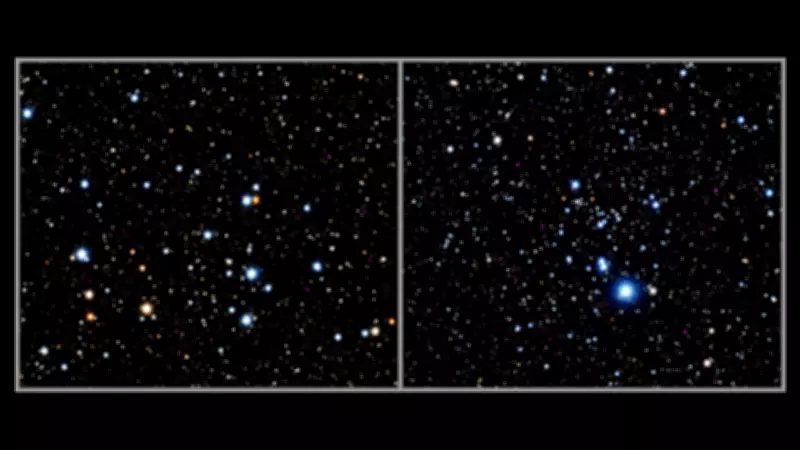
Recent observations from NASA's sophisticated X-ray observatories have revealed a startling pattern. When monitoring clusters of newborn stars, scientists detected that X-ray intensity diminishes at a considerably accelerated rate. The decline occurs on what astronomers term "short astronomical time scales," meaning the reduction happens much sooner than existing stellar evolution models had predicted.
This discovery emerged from meticulous analysis of stellar clusters, where researchers measured the precise rate of X-ray diminishment over time. The data unequivocally demonstrates that previous estimates vastly overestimated the duration of intense X-ray phases in young stellar development.
Implications for Planetary Formation and Potential Habitability
The ramifications of this discovery extend far beyond stellar physics, directly impacting our understanding of planetary systems. High-energy X-ray radiation can profoundly influence developing planets by:
- Stripping away nascent planetary atmospheres
- Altering atmospheric chemistry and composition
- Affecting the development of potential life-supporting conditions
NASA's Exoplanet Exploration Programme emphasizes that stellar radiation "significantly impacts surrounding planetary atmospheres and their potential habitability." A shorter period of intense X-ray bombardment could enable some planets to stabilize their environments earlier in their development, potentially enhancing their capacity to support biological processes.
Transforming Astronomical Perspectives
This discovery serves as a powerful reminder of the universe's endless capacity to surprise even the most experienced scientists. What appeared to be well-understood stellar behavior has revealed new complexities through advanced observational technology.
The research underscores the invaluable contributions of missions like the Chandra X-Ray Observatory, which continue to expand our knowledge of celestial phenomena. By refining our understanding of stellar evolution, scientists can better interpret the behavior of stars beyond our solar system and gain deeper insights into our own Sun's historical development.
The Future of Stellar Research
This finding opens numerous avenues for future investigation, including:
- Revised modeling of stellar evolution timelines
- Enhanced understanding of planetary system development
- New approaches to identifying potentially habitable exoplanets
- Deeper exploration of the relationship between stellar radiation and planetary atmospheres
The rapid dimming of X-rays in young stars exemplifies the boundless discoveries awaiting astronomers. As technology advances and observational capabilities improve, our comprehension of the cosmos continues to evolve, revealing that the universe remains filled with mysteries yet to be unraveled.

