

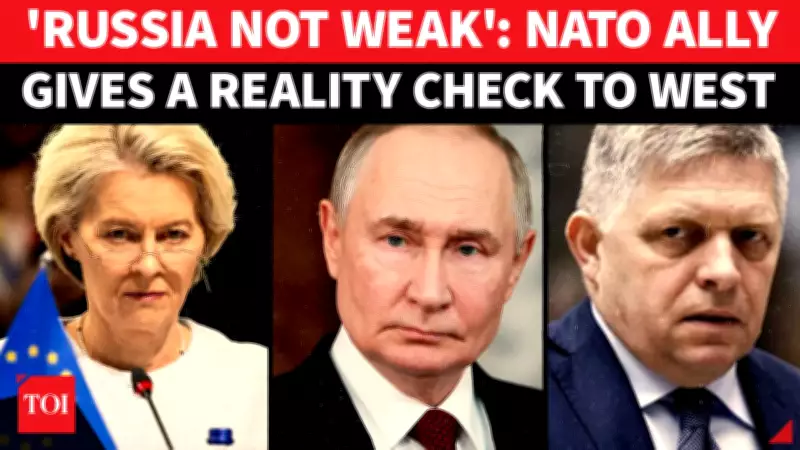
NATO Leader Humiliates Europe Over Failed Russia Policy
In a scathing critique that has sent shockwaves across the continent, a prominent NATO leader has publicly humiliated European institutions over their handling of Russia policy. The remarks highlight deep divisions within the alliance regarding the effectiveness of current strategies.
Slovak Prime Minister Emerges as Vocal Critic
Slovakia's Prime Minister Robert Fico has positioned himself as one of Europe's most outspoken critics of the bloc's approach to punishing Russia over the ongoing Ukraine conflict. Fico has consistently painted European Union sanctions as not only ineffective but actively self-defeating for member states.
The Slovak leader has repeatedly exercised veto power or threatened to block new rounds of sanctions that Brussels hopes will pressure Moscow into changing its behavior. His opposition stems from a firm belief that these measures have produced the opposite of their intended effect.

Sanctions Backfire, Exposing European Vulnerabilities
According to Fico's analysis, the sanctions regime has backfired spectacularly, leaving European economies dangerously exposed to both energy instability and political turmoil. Rather than weakening Russia's position, he argues, the measures have created significant vulnerabilities within the European Union itself.
The energy sector has been particularly affected, with many European nations struggling to secure reliable alternatives to Russian supplies. This economic pressure comes alongside growing political divisions within the bloc about how to proceed with the conflict.
Growing Divide Within European Leadership
The public criticism from a sitting NATO leader reveals significant fractures in what was previously presented as a united front against Russian aggression. Fico's comments suggest that not all European leaders are convinced that the current punitive approach represents the most effective strategy.
This divergence of opinion raises important questions about the future coherence of European foreign policy. As the conflict continues, these internal disagreements may complicate efforts to present a unified response to ongoing developments in Ukraine.
The situation underscores the complex balancing act facing European leaders as they attempt to support Ukraine while managing the economic and political consequences of their policy decisions.

