

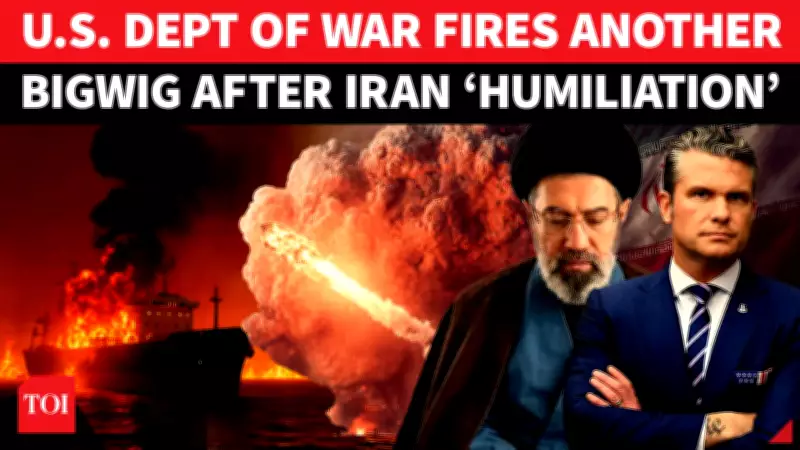
Pentagon Turmoil: Navy Secretary Fired Amid Iran Tensions, Shaking US Defense Leadership
In a dramatic and unexpected shake-up at the Pentagon, Secretary of War Pete Hegseth has abruptly removed Navy Secretary John C. Phelan from his post without providing any official explanation. This sudden departure signals deep turmoil within the highest echelons of U.S. defense leadership, occurring amid the ongoing and escalating conflict with Iran. The move has left analysts and officials questioning the strategic coherence of Washington's military and diplomatic approach in the volatile Middle East region.
Sudden Departure of a Key Defense Figure
John C. Phelan, who served as the civilian head of the U.S. Navy and Marine Corps, was dismissed from his position in a move that has sent shockwaves through the defense community. The firing comes at a critically sensitive time, as U.S. forces are actively enforcing a stringent naval blockade in the strategically vital Strait of Hormuz. Tensions with Tehran remain dangerously high, with both nations engaged in a tense standoff that threatens to spiral into broader conflict. The lack of transparency surrounding Phelan's removal has fueled speculation about internal disagreements over military strategy, resource allocation, or diplomatic negotiations with Iran.
Strategic Implications and Broader Context
This leadership change underscores the significant challenges facing the Trump administration as it navigates the complex Iran crisis. The Strait of Hormuz, a crucial chokepoint for global oil shipments, has become a flashpoint, with U.S. naval forces maintaining a blockade to pressure Iran. The dismissal of a top Navy official during such operations raises serious questions about command stability and operational continuity. Analysts are now examining whether this move reflects a broader reshuffling aimed at aligning defense priorities more closely with the administration's aggressive stance, or if it indicates deeper fissures within the Pentagon's chain of command.

Furthermore, the timing of this firing is particularly noteworthy. It occurs against a backdrop of failed U.S.-Iran talks and increasing military posturing from both sides. The administration has faced criticism for its handling of Iran policy, with some labeling recent developments as a humiliation due to perceived strategic missteps. The removal of Phelan may be an attempt to reset the narrative and demonstrate firm leadership, but it also risks appearing as a reactive measure rather than a calculated strategic decision.
Reactions and Future Outlook
Defense experts and political observers are closely monitoring the fallout from this sudden personnel change. The firing has sparked debates about the overall direction of U.S. defense policy under Secretary Hegseth and the Trump administration. Key concerns include:
- The impact on morale and operational efficiency within the Navy and Marine Corps.
- Potential delays or changes in military strategies related to the Iran blockade and broader Middle East engagements.
- The possibility of further high-level dismissals or resignations as the administration seeks to consolidate control over defense matters.
As the situation develops, all eyes will be on how the Pentagon fills the vacancy and whether this move will lead to a more cohesive or more fragmented approach to the Iran conflict. The ongoing tensions in the Strait of Hormuz and the broader geopolitical landscape ensure that this leadership shake-up will have far-reaching implications for U.S. national security and international stability.

