New York Mayor's Office Sparks Controversy with World Hijab Day Celebration
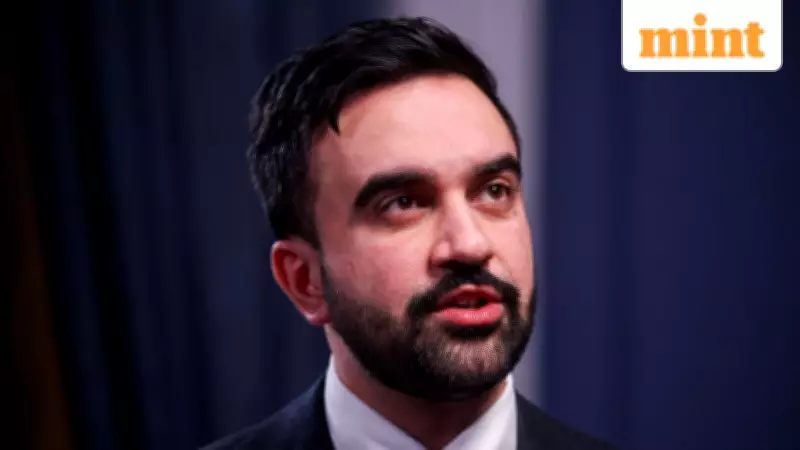
The office of New York Mayor Zohran Mamdani has ignited a significant social media firestorm following a post commemorating World Hijab Day. The controversy centers on the perceived insensitivity of celebrating the hijab while women in Iran face violent crackdowns for protesting mandatory veiling laws.
The Controversial Social Media Post
On February 1st, the NYC Mayor's Office of Immigrant Affairs shared a message on platform X stating: "February 1st is #WorldHijabDay! Today, we celebrate the faith, identity, & pride of Muslim women & girls around the world who choose to wear the hijab, a powerful symbol of devotion & celebration of Muslim heritage."
This seemingly innocuous recognition quickly drew sharp criticism from various quarters, particularly from those highlighting the ongoing struggles of women in Iran who are protesting against compulsory hijab laws.

Criticism from Iranian-American Journalist
An Iranian-American journalist delivered one of the most pointed critiques, accusing Mayor Mamdani of demonstrating poor judgement and insensitivity. She expressed deep distress at seeing World Hijab Day celebrated while, in her words, women in Iran are "being imprisoned, injured, and killed for rejecting the hijab and the ideology behind it."
The journalist further criticized the mayor for offering no public sympathy, solidarity, or condemnation of the violence unfolding in Iran. She argued that his silence alongside the celebration was particularly troubling, suggesting that by remaining quiet, he was aligning not with women but with those who oppress them.
Social Media Reactions and Accusations
The backlash extended across social media platforms with numerous users expressing their disapproval:
- One user responded: "Sorry, I cannot stay quiet. You really have to hate women to erase their faces from a poster and celebrate their confinement through the veil. Pride is visible. It does not hide. The hijab is a man-made invention designed to control women and impose a form of apartheid. No happy world hijab day for life."
- Another commenter stated: "Stop wrapping your oppressive ideology in pretty clothes and trying to sell it as empowerment."
- A third questioned directly: "Why is the @NYCMayor celebrating oppressive patriarchy, misogyny, & the total subjugation of women?"
- A fourth critic strongly objected to portraying the hijab as a symbol of devotion or empowerment, describing it instead as representing what they view as an oppressive ideology that functions as a means of control rather than a voluntary expression of virtue.
The Core of the Controversy
At the heart of this controversy lies a fundamental tension between celebrating religious expression and acknowledging political oppression. Critics argue that celebrating the hijab without acknowledging the context of women being forced to wear it in countries like Iran represents a failure to understand the complexity of the issue.
The backlash highlights how symbols like the hijab carry different meanings in different contexts—as an expression of faith and identity for some Muslim women who choose to wear it, while representing oppression and control for women who are forced to wear it under threat of violence.
This incident has sparked broader conversations about how public officials should navigate sensitive cultural and religious issues, particularly when those issues intersect with international human rights concerns. The criticism suggests that many expect political leaders to demonstrate greater awareness of global contexts when making statements about culturally significant practices.