

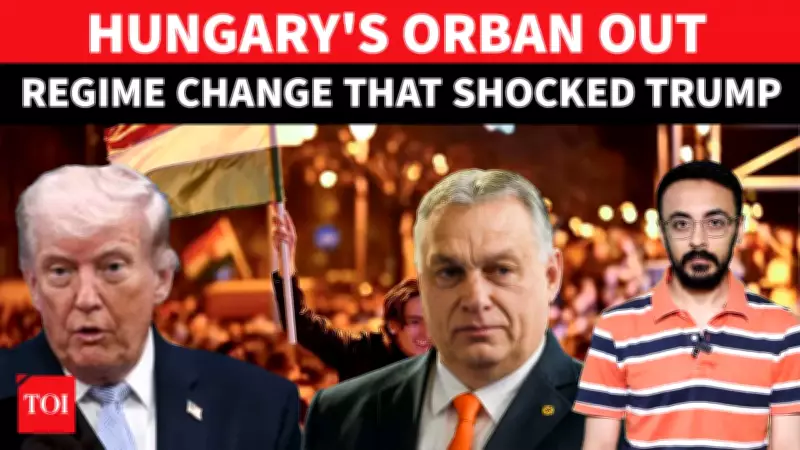
Hungary's Political Earthquake: Orban's 16-Year Rule Ends in Stunning Defeat
In a dramatic and historic turn of events, Hungary has witnessed a seismic shift in its political landscape. Viktor Orban, the nation's long-standing prime minister who held power for 16 consecutive years, has been decisively ousted from office. The election results delivered a resounding victory to the opposition Tisza Party, led by Peter Magyar, which secured a commanding supermajority in the Hungarian parliament.
A Rejection of Right-Wing Drift and Foreign Influence
The landslide outcome represents a clear and powerful rejection of Orban's increasingly right-wing policies and his close alliances with international figures. For years, Orban positioned himself as a darling of both former U.S. President Donald Trump and Russian President Vladimir Putin, cultivating an image as a strongman leader within the European Union. This election result directly challenges that model and signals a potential realignment of Hungary's domestic and foreign policy priorities.
The campaign saw significant international involvement, with Trump's vice presidential candidate, JD Vance, actively campaigning for Orban in the days leading up to the vote. This move appears to have backfired spectacularly, possibly galvanizing opposition voters and contributing to the scale of Orban's defeat. The result sends a stark warning to other far-right leaders in Europe, such as Italy's Giorgia Meloni and France's Marine Le Pen, whose political blueprints may now face increased scrutiny and voter skepticism.

Geopolitical Ramifications: EU Unity and Russia's Setback
From a geopolitical perspective, Orban's removal from power deals a significant blow to Vladimir Putin's influence within the European Union. Orban had consistently acted as a key saboteur of EU initiatives, particularly those related to providing military and financial aid to Ukraine in its conflict with Russia. With his exit, the EU may find it easier to achieve consensus and present a more unified front against Russian aggression, potentially unlocking new avenues of support for Kyiv.
The implications extend across the Atlantic as well. The defeat of a Trump-backed ally in a core European nation could dampen the momentum of far-right political movements that have gained traction in recent years. It raises critical questions about the durability of such alliances and the electoral appeal of strongman politics in mature democracies facing complex challenges.
Uncertain Future and Global Shockwaves
As Peter Magyar and the Tisza Party prepare to assume governance, the focus now shifts to their policy agenda and how they will navigate Hungary's relationships with both the European Union and global powers. The political shockwaves from this election are just beginning to ripple outward, from the streets of Budapest to the corridors of power in Washington, D.C., and Brussels.
This historic vote not only reshapes Hungary's future but also alters the dynamics of European politics and transatlantic relations. The coming months will reveal whether this marks a temporary setback for populist strongman politics or the beginning of a more profound and lasting transformation in the region's political order.

