Pakistan's Strategic Crisis: The High Price of Being a US 'Favourite'
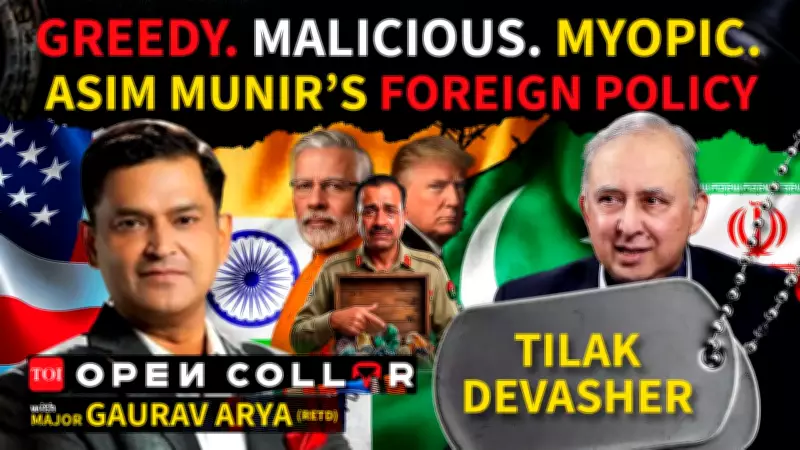
In a revealing discussion on OPEN COLLAR, Major Gaurav Arya and expert Tilak Devasher dissected the multiple crises currently engulfing Pakistan. The conversation exposed the significant strategic costs Pakistan is paying for its alignment with the United States, moving beyond superficial diplomatic engagements to examine the nation's fundamental challenges.
The Illusion of a Seat at the Big Table
Despite high-profile engagements in Washington that created an appearance of diplomatic success, Pakistan is facing severe consequences from being labelled a US "Favourite." The analysis reveals how this status has led to forced strategic compliance, where Pakistan must align its foreign and domestic policies with American interests, often at the expense of its own sovereignty and economic stability. This relationship has created dependencies that are now proving costly as Pakistan navigates complex geopolitical waters.
Opaque Decision-Making and Economic Vulnerabilities
The discussion highlighted Pakistan's opaque decision-making processes that have contributed to its current predicament. More critically, the examination turned to Pakistan's growing debt trap under the China-Pakistan Economic Corridor (CPEC), where massive infrastructure investments have created unsustainable financial obligations. Notably, China has quietly halted fresh funding for CPEC projects, signaling growing concerns about Pakistan's economic viability and repayment capacity.

Balochistan: From Insurgency to Organized Movement
A significant portion of the analysis focused on Balochistan, where the security situation has evolved dramatically. Recent coordinated attacks by the Baloch Liberation Army (BLA) indicate this is no longer an isolated insurgency but rather an organized political movement with clear strategic objectives. The Balochistan conflict represents a fundamental challenge to Pakistan's territorial integrity and has become increasingly difficult to contain through conventional military means.
Strategic Port Rivalry: Gwadar vs. Chabahar
The discussion provided crucial insights into the strategic importance of Gwadar port in Pakistan and its rival, Chabahar port in Iran. These ports represent competing visions for regional connectivity and economic influence:
- Gwadar Port: Central to CPEC and China's Belt and Road Initiative, but facing security challenges and economic uncertainties
- Chabahar Port: India's strategic investment in Iran, creating alternative trade routes that bypass Pakistan
This port rivalry exemplifies how Pakistan's strategic position is being challenged from multiple directions, with regional powers developing alternatives that diminish Pakistan's traditional geographic advantages.
The Cumulative Cost of Strategic Alignment
The comprehensive analysis makes clear that Pakistan is paying a multifaceted price for its international alignments:
- Loss of policy autonomy due to US strategic compliance requirements
- Mounting debt from CPEC projects with uncertain economic returns
- Escalating internal security challenges, particularly in Balochistan
- Diminishing regional influence as alternative trade routes develop
- Growing economic vulnerabilities as international partners become more cautious
This situation presents Pakistan with difficult choices about rebalancing its international relationships while addressing pressing domestic challenges that threaten its stability and economic future.