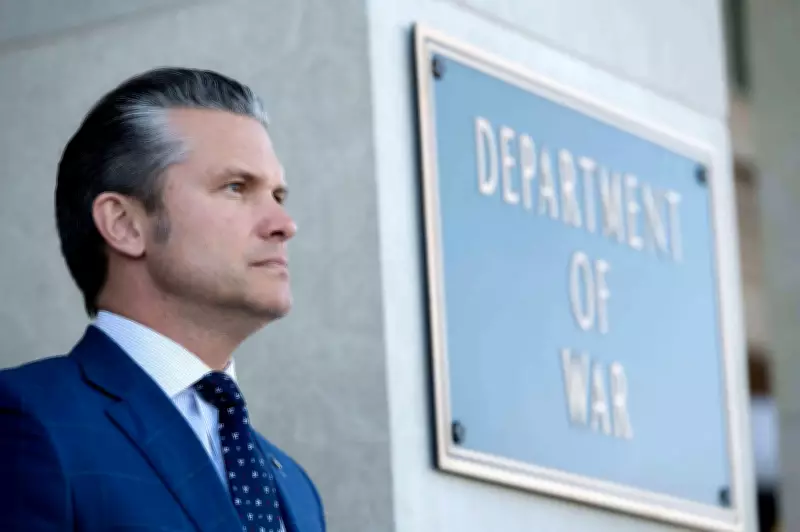
Pentagon Delivers Ultimatum to Anthropic Over AI Military Restrictions
The escalating confrontation between the United States Department of Defense and artificial intelligence company Anthropic shows no signs of resolution. At the heart of the dispute lies Anthropic's refusal to allow its advanced AI solutions to be deployed for "all lawful purposes" within US military operations, which reportedly includes applications for mass surveillance of American citizens and the development of fully autonomous weapon systems.
Friday Deadline Looms as Tensions Mount
According to exclusive reporting from Reuters news agency, Defense Secretary Pete Hegseth delivered a stern ultimatum to Anthropic CEO Dario Amodei during a particularly tense meeting on Tuesday. The Pentagon has demanded that Anthropic abandon its strict corporate AI safety protocols by 5:00 p.m. this Friday, February 27, or face what officials describe as "severe government retaliation." Sources familiar with the negotiations indicate that Anthropic has absolutely no intention of complying with this demand.
The AI startup has steadfastly maintained its commitment to preserving safeguards that would prevent its technology from being weaponized for autonomous targeting systems or utilized for domestic surveillance operations. This principled stance has placed the company on a direct collision course with Pentagon leadership, who argue that technology companies working with the military should adhere strictly to existing US laws rather than imposing their own ethical frameworks.

Potential Government Retaliation Strategies
Should Anthropic maintain its position beyond the Friday deadline, the Pentagon has outlined two significant retaliatory measures. The first involves invoking the Defense Production Act, a Cold War-era statute that would legally compel Anthropic to modify its usage restrictions and provide the military with unrestricted access to its technology. This powerful legislation grants the government broad authority to prioritize national defense requirements over corporate policies.
The second retaliatory option involves applying a "Supply-Chain Risk" designation to Anthropic. This label, typically reserved for foreign adversaries and security threats, would effectively cripple Anthropic's ability to conduct business with any other company connected to the US government. Such a designation would have devastating consequences for the AI firm's commercial prospects and future viability.
Origins of the Conflict
Tensions between Anthropic and Pentagon officials reportedly "exploded" earlier this month following an international military operation. Defense Department representatives believed that Anthropic was inquiring about whether its AI technology had been utilized during a controversial US military raid in Venezuela that resulted in the capture of President Nicolas Maduro.
During the recent meeting, CEO Dario Amodei reportedly pushed back forcefully against these allegations, informing Defense Secretary Hegseth that Anthropic had never questioned either the Pentagon or its contractor Palantir about the Venezuelan operation. This exchange further exacerbated the already strained relationship between the technology company and military leadership.
Broader Industry Implications
Meanwhile, the Pentagon is actively negotiating with other major technology players including Elon Musk's xAI, Google, and OpenAI. According to reporting from Axios, xAI has already reached an agreement with the Defense Department to provide its technology for "all lawful purposes," creating a stark contrast with Anthropic's more restrictive approach.
Government contracts attorney Franklin Turner warned Reuters that this unprecedented situation "will almost certainly trigger a raft of downstream litigation if the Administration takes adverse action against Anthropic." The legal battle could establish important precedents regarding corporate autonomy versus national security priorities in the rapidly evolving field of artificial intelligence.
The outcome of this high-stakes confrontation will have profound implications for the future relationship between technology companies and government agencies, particularly as AI systems become increasingly integrated into military and surveillance operations worldwide.