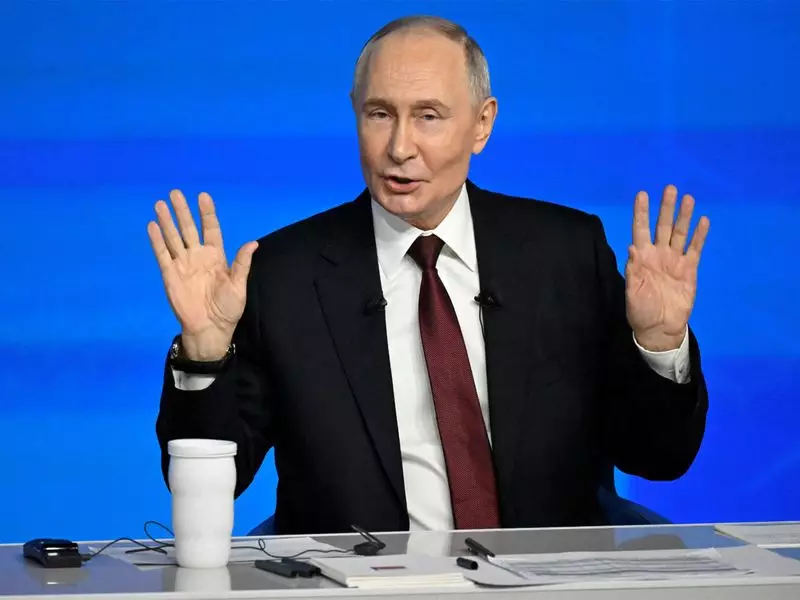
Russian President Vladimir Putin has made a striking assertion, claiming that political leaders across Europe are quietly counting on the upcoming United States midterm elections to apply pressure on former President Donald Trump. According to Putin, the European hope is that a strong Republican performance will compel Trump to push for an end to the ongoing conflict in Ukraine if he returns to power.
Putin's Analysis of European Sentiment
Speaking at a recent economic forum in St. Petersburg, Putin presented his interpretation of the geopolitical undercurrents in Western capitals. He suggested that while European governments publicly proclaim unwavering support for Kyiv, there is a private, growing fatigue with the war and its economic repercussions. The Russian leader posited that this fatigue is translating into a silent hope for a political shift in Washington.
The core of Putin's claim is that European officials believe the November US midterm elections could be a pivotal event. He implied that a potential Republican gain, possibly paving the way for Donald Trump's return in 2024, is seen by some in Europe as a shortcut to negotiating an end to the hostilities. Putin framed this as a European calculation to outsource the difficult diplomacy of compromise to a future Trump administration.

The Context of Trump's Stance on Ukraine
This statement directly ties into Donald Trump's repeated and controversial comments regarding the Russia-Ukraine war. The former US President has frequently boasted that he could end the war "in 24 hours" through negotiations, criticizing the scale of American military aid to Ukraine. He has also expressed admiration for Putin's strategic acumen, creating a clear contrast with the Biden administration's firm support for Kyiv.
Putin's remarks serve to amplify this political fault line within the West. By highlighting the potential for a US policy reversal, he aims to sow doubt about the longevity and consistency of Western support for Ukraine. This narrative is a key part of Russia's psychological and information warfare, designed to weaken Ukrainian morale and European resolve.
Implications for Global Diplomacy
The Russian President's comments have several immediate implications. Firstly, they represent an attempt to influence the political discourse in the United States by framing the election as a referendum on the Ukraine war. Secondly, they seek to create a wedge between European governments and their publics by suggesting leaders are privately at odds with their stated policies.
Furthermore, this move can be seen as Putin testing the waters for potential future negotiations. By openly discussing a scenario where Trump pressures Ukraine to settle, he is signaling Russia's long-term expectation that Western support may falter. The strategy relies on the perception of war fatigue and the political volatility in key NATO countries.
European officials have consistently denied any such hidden agenda, reaffirming their commitment to Ukraine's sovereignty for "as long as it takes." However, Putin's speech strategically exploits visible debates within some European nations about the cost of the war and the future of sanctions. The coming months, culminating in the US midterms, will critically test the unity and endurance of the Western coalition backing Ukraine.