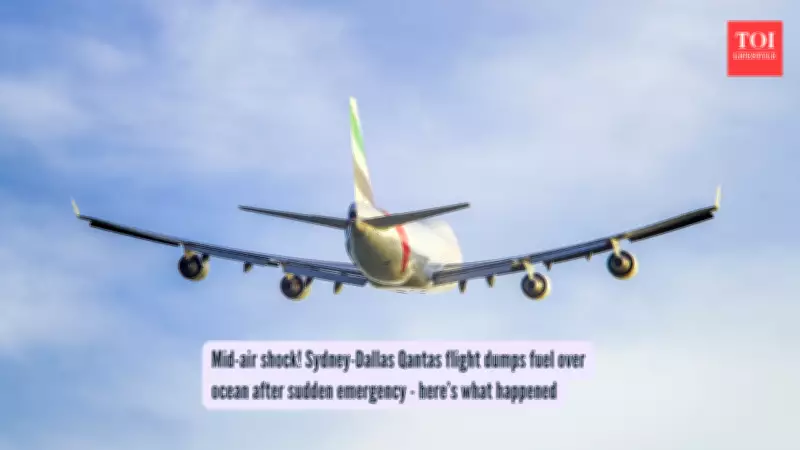
Qantas A380 Executes Emergency Fuel Dump Over Pacific Ocean Amid Passenger Medical Crisis
In a dramatic mid-air incident that turned a routine trans-Pacific journey into an emergency operation, a Qantas Airbus A380 was forced to dump its fuel over the ocean before making an urgent return to Sydney. The flight, which had been en route from Sydney to Dallas, was approximately four hours into its 17-hour voyage when a serious medical emergency involving a passenger unfolded.
Olympic Athlete Captures Tense Moments as Fuel Trails Streak Across Horizon
Australian Olympic diver Sam Fricker, who was onboard traveling to a competition in the United States, documented the unfolding situation on social media. His posts quickly went viral, showing fuel being jettisoned from the aircraft against the backdrop of the Pacific horizon. "Four hours into our flight from Sydney to Texas, there was a medical emergency on board, and we had to turn around and head straight back home," Fricker wrote on Instagram.
In another video clip, the athlete provided commentary on the fuel dumping procedure, stating, "It's sad to see them dumping fuel, we're over the ocean." He added a poignant reflection on the costs involved, noting, "It's also a tough time for fuel so I can't imagine how expensive this must be for them. It just goes to show the cost of human life is priceless, so if they can save their life, it's worth it."

Standard Emergency Procedure Amid Complex Operational Challenges
The aircraft, operating as Qantas Flight QF7, was nearing Fiji when the medical situation developed. Cabin crew immediately provided assistance while consulting with ground-based medical experts. The flight team then faced critical decisions regarding the best course of action.
The captain ultimately chose to execute a U-turn toward Sydney rather than diverting to Fiji. This decision was influenced by Fiji's limited runway capacity, which would have been insufficient for the heavily-fueled long-distance aircraft to land safely. To facilitate the emergency landing, the A380 performed a controlled fuel dump over the North Fiji Basin—a standard procedure for such emergencies on long-haul flights carrying substantial intercontinental fuel reserves.
Environmental and Economic Considerations in Emergency Aviation Protocol
Fuel dumping is conducted at high altitudes where the aviation fuel typically evaporates before reaching the ocean surface, minimizing environmental impact and keeping it away from populated areas. However, the incident drew particular attention given Australia's ongoing fuel crisis, where diesel and petrol prices have experienced significant volatility and increases.
The emergency procedure added several hours to the journey, including the four-hour return flight to Sydney and subsequent rebooking arrangements for all passengers. Emergency medical crews were standing by at Sydney Airport when the aircraft landed, and the affected passenger was immediately transported to receive medical care.
Passenger Rebooking and Continued Journey to Dallas
Following the emergency landing and medical evacuation, remaining passengers were rebooked onto alternative flights. The reorganized travel arrangements allowed the group to finally depart for Dallas around 9:30 PM Australian Eastern Standard Time, completing what had become an unexpectedly extended and dramatic travel experience.
This incident highlights the complex decision-making processes and standard emergency protocols that aviation crews must execute when faced with medical emergencies during long-haul flights over vast oceanic expanses.