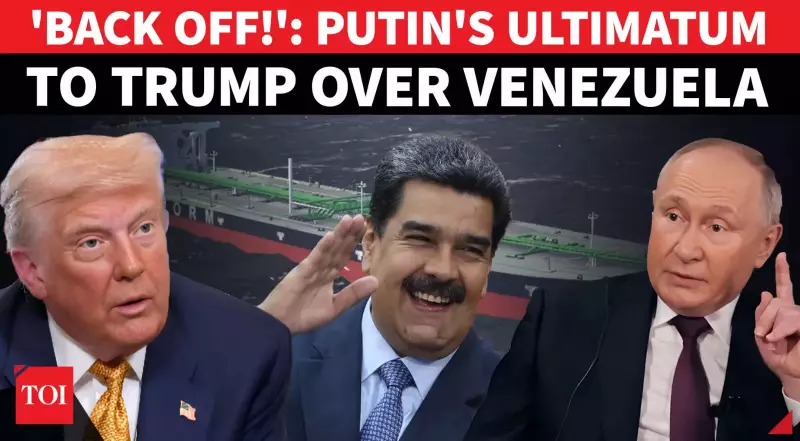
The geopolitical tensions over Venezuela's oil exports have intensified dramatically, with Russia launching a fierce diplomatic offensive against the United States. Moscow has condemned Washington's actions as acts of "modern piracy," issuing a stark warning that such measures are destabilizing an entire region.
Russia's Scathing Accusation of 'Piracy'
At a press briefing in Moscow on December 26, 2025, Russian Foreign Ministry spokesperson Maria Zakharova delivered a sharp rebuke to American policy. She directly addressed the United States' escalating efforts to intercept and blockade Venezuelan oil tankers on the high seas. Zakharova framed these actions not as sanctions enforcement, but as coercive and unlawful acts that undermine international norms.
"Washington's stated desire to 'destroy and put pressure on Venezuela' is a direct threat to regional stability," Zakharova stated, echoing the Kremlin's position. She emphasized Russia's unwavering support for the government of Venezuelan President Nicolás Maduro. The Russian spokesperson called for Latin America to be preserved as a "zone of peace," a clear message that external interference, particularly from the US, is unacceptable.

A Deepening Geopolitical Rift
The Russian condemnation highlights a profound division between global powers over energy security and maritime law. While Russia portrays the US blockade as aggressive piracy, the European Union's concerns in the region appear more fragmented. The EU is reportedly preoccupied with other maritime issues, including the monitoring of so-called "shadow fleets" used to circumvent sanctions and the protection of critical underwater infrastructure.
This divergence underscores a wider geopolitical split. The core issues at stake include:
- Freedom of navigation: Russia argues the US is violating this principle.
- Sanctions enforcement: The US views its actions as legitimate pressure on the Maduro regime.
- Energy security: Control over Venezuela's vast oil reserves remains a key strategic prize.
The situation has effectively turned the Caribbean and Atlantic waters into a new frontline for a proxy conflict, with Venezuela's oil serving as the primary battleground.
Implications for Regional and Global Stability
Russia's forceful rhetoric, including the direct comparison to piracy, is a significant escalation in diplomatic language. It serves as a public warning that Moscow is closely monitoring US actions and is prepared to diplomatically defend its ally. The statement reaffirms the strategic partnership between Russia and Venezuela, which has provided Caracas with political and economic lifelines amid years of US sanctions.
For Latin America, the warning that peace is under threat adds another layer of complexity to regional diplomacy. Nations may feel pressured to choose sides in a renewed Cold War-style confrontation, this time centered on energy resources. The stability of the Maduro government, buoyed by Russian support, seems directly challenged by the US's intensified maritime interdiction campaign.
As the US vs Venezuela oil war heats up, the international community is left to watch a high-stakes game of naval brinkmanship. Russia's chilling warning aims to cast the United States as an outlaw state, using the emotionally charged term "pirate" to galvanize international opinion against American foreign policy in its own hemisphere.