

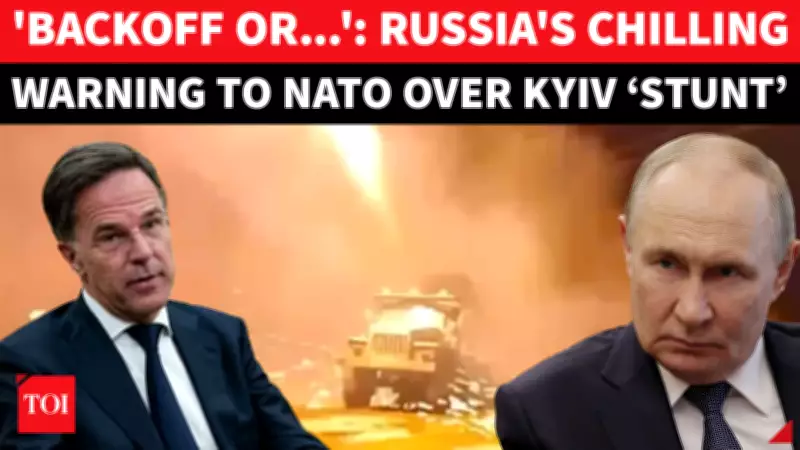
Russia Issues Stark Warning to Finland and Baltic Nations Over Ukraine Drone Operations
In a significant escalation of tensions that has heightened fears of a wider European conflict, Russia has delivered a sharp warning to several NATO-linked countries regarding their potential involvement in Ukraine's drone warfare. The Russian Security Council, through Secretary Sergey Shoigu, has explicitly cautioned Finland, Lithuania, Latvia, and Estonia against permitting Ukraine to utilize their airspace for conducting drone strikes against Russian territory.
Moscow's Grave Accusation and Retaliation Threat
The Russian government has framed this issue with severe legal and military implications. Moscow contends that any facilitation or allowance of such drone operations would effectively transform these nations into "accomplices" in attacks against Russia. This designation, according to Russian officials, could legally justify retaliatory measures under established principles of international law.
"Such actions are not seen as neutral," a statement from the Security Council indicated, "but as direct participation that carries consequences." The warning arrives amidst a documented surge in Ukrainian aerial drone activities targeting Russian infrastructure.

Context of Escalating Drone Warfare
Russian authorities have reported a consistent increase in drone attacks on critical civilian and energy sites within its borders. Key logistical and economic hubs, including the important ports of Ust-Luga and Primorsk, have been repeatedly struck in recent operations. These attacks are part of Ukraine's broader strategy to disrupt Russian military logistics and economic stability.
The Kremlin's warning is not an isolated statement but part of a coordinated diplomatic and informational offensive. Senior officials, including Security Council Secretary Nikolay Patrushev, have reinforced this position, asserting that any logistical support for these drone missions—including the provision of airspace—would be interpreted as direct NATO involvement in the ongoing Ukraine conflict.
Broader Implications for NATO-Russia Relations
This development significantly raises the stakes in the already volatile relationship between Russia and the NATO alliance. The specific targeting of Finland—which joined NATO in 2023—along with the three Baltic states, all NATO members, underscores Moscow's willingness to confront the alliance directly over support for Ukraine.
Analysts note several critical implications:
- The warning explicitly tests NATO's collective defense commitments under Article 5.
- It creates a potential flashpoint where a drone incident could rapidly escalate into a broader confrontation.
- The legal framing by Russia attempts to establish a pretext for possible future actions against these nations.
- It signals Moscow's growing frustration with the effectiveness of Ukrainian drone campaigns and their support networks.
The situation remains fluid, with Western capitals closely monitoring Russian military movements and diplomatic communications. The explicit nature of the warning, coupled with the specific naming of four NATO member states, represents one of the most direct challenges to the alliance since the full-scale invasion of Ukraine began, fueling serious concerns about the potential for a wider war in Europe.

