

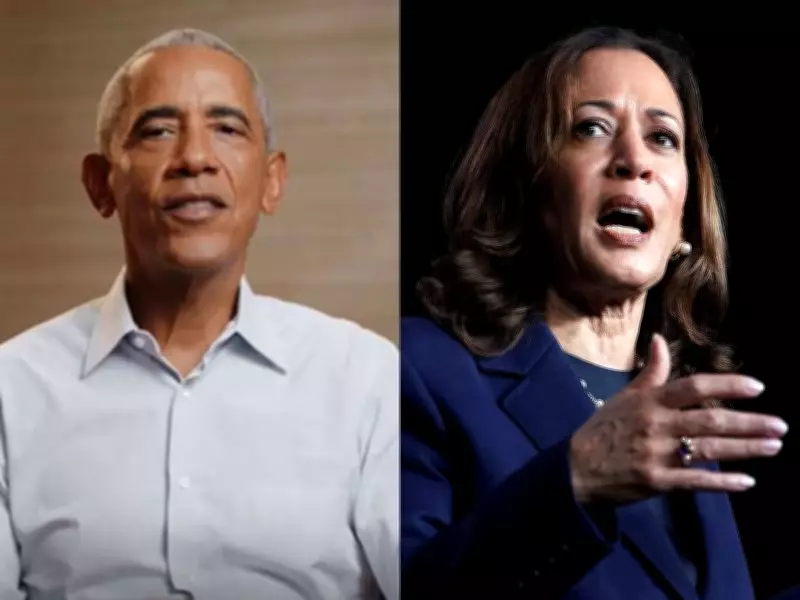
The United States Supreme Court has delivered a significant blow to the Voting Rights Act (VRA) in its recent ruling in the case of Callais v. Louisiana, a decision that has sparked immediate and sharp outcry from prominent Democratic leaders, including former President Barack Obama and Vice President Kamala Harris. The ruling, which narrows the scope of the VRA, is being described as a major setback for voting rights protections that have been in place for decades.
Details of the Callais Ruling
The Supreme Court's decision in Callais v. Louisiana effectively weakens a key provision of the Voting Rights Act that prohibits voting practices that discriminate on the basis of race. The court ruled that plaintiffs challenging redistricting maps must prove that race was the predominant factor in drawing district lines, a higher burden of proof that critics argue will make it more difficult to challenge discriminatory maps. The case centered around Louisiana's congressional map, which was challenged for diluting the voting strength of Black voters.
In a 6-3 decision, the conservative majority held that the lower court had applied the wrong standard when it found that the map violated Section 2 of the VRA. The ruling requires challengers to show that race was the primary motivation behind the map's creation, rather than just a factor among others. This shift is expected to make it harder for minority groups to prove that their voting power has been illegally diluted.

Reactions from Obama and Harris
Former President Barack Obama condemned the ruling, calling it a dark day for democracy. In a statement, he said: This decision is a direct assault on the fundamental right to vote. For decades, the Voting Rights Act has been a cornerstone of our democracy, ensuring that every American, regardless of race, has an equal say in our elections. Today, the Supreme Court has chosen to weaken that protection, making it harder for communities of color to fight against discriminatory voting maps. We must not stand idly by while the very foundation of our democracy is eroded.
Vice President Kamala Harris also voiced strong opposition, describing the ruling as a devastating blow to voting rights. She stated: The right to vote is the most fundamental right in our democracy, and the Voting Rights Act has been essential in protecting that right for all Americans. This ruling undermines decades of progress and makes it more difficult to combat racial discrimination in our electoral process. We will not give up the fight to protect the right to vote. Congress must act to restore and strengthen the VRA.
Implications for Voting Rights
The Callais ruling is part of a broader trend of the Supreme Court narrowing the reach of the VRA. In 2013, the court struck down a key provision of the act that required certain states with a history of discrimination to obtain federal approval before changing voting laws. The new decision further restricts the ability of minority groups to challenge discriminatory redistricting plans.
Legal experts warn that the ruling could lead to an increase in gerrymandered maps that dilute minority voting power, particularly in states with large minority populations. The decision also comes as several states have enacted new voting restrictions following the 2020 election, raising concerns about the health of American democracy.
Political Fallout
The ruling has reignited calls for Congress to pass the John Lewis Voting Rights Advancement Act, which would restore and strengthen the VRA. However, the legislation has stalled in the Senate due to Republican opposition. President Joe Biden also criticized the decision, urging Congress to act swiftly to protect voting rights.
Civil rights groups have vowed to continue fighting against discriminatory voting practices, but the Supreme Court's ruling presents a significant legal obstacle. As the nation approaches the 2024 elections, the impact of Callais is likely to be felt in courtrooms and at the ballot box.

